Swakopmund — Steering, Seals, and Damaraland
Swakopmund — Direcção, Focas e Damaraland
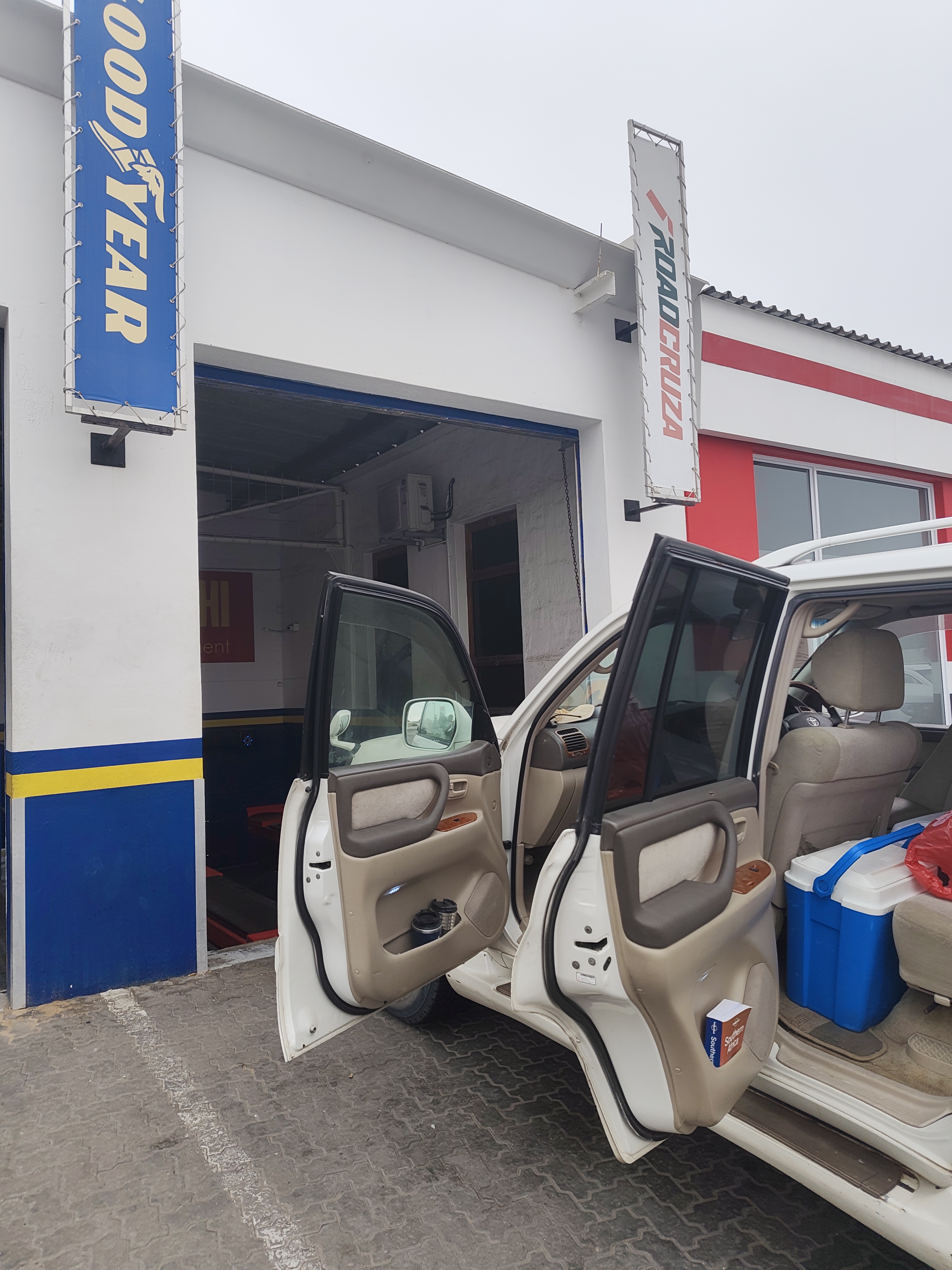
📍 Khorixas, Damaraland, NamibiaWe had arranged for 7:30 AM to get the steering aligned. Punctual as ever, I dropped off the car and went back to the hotel for breakfast. "It'll be ready by 8:30 AM," they promised.
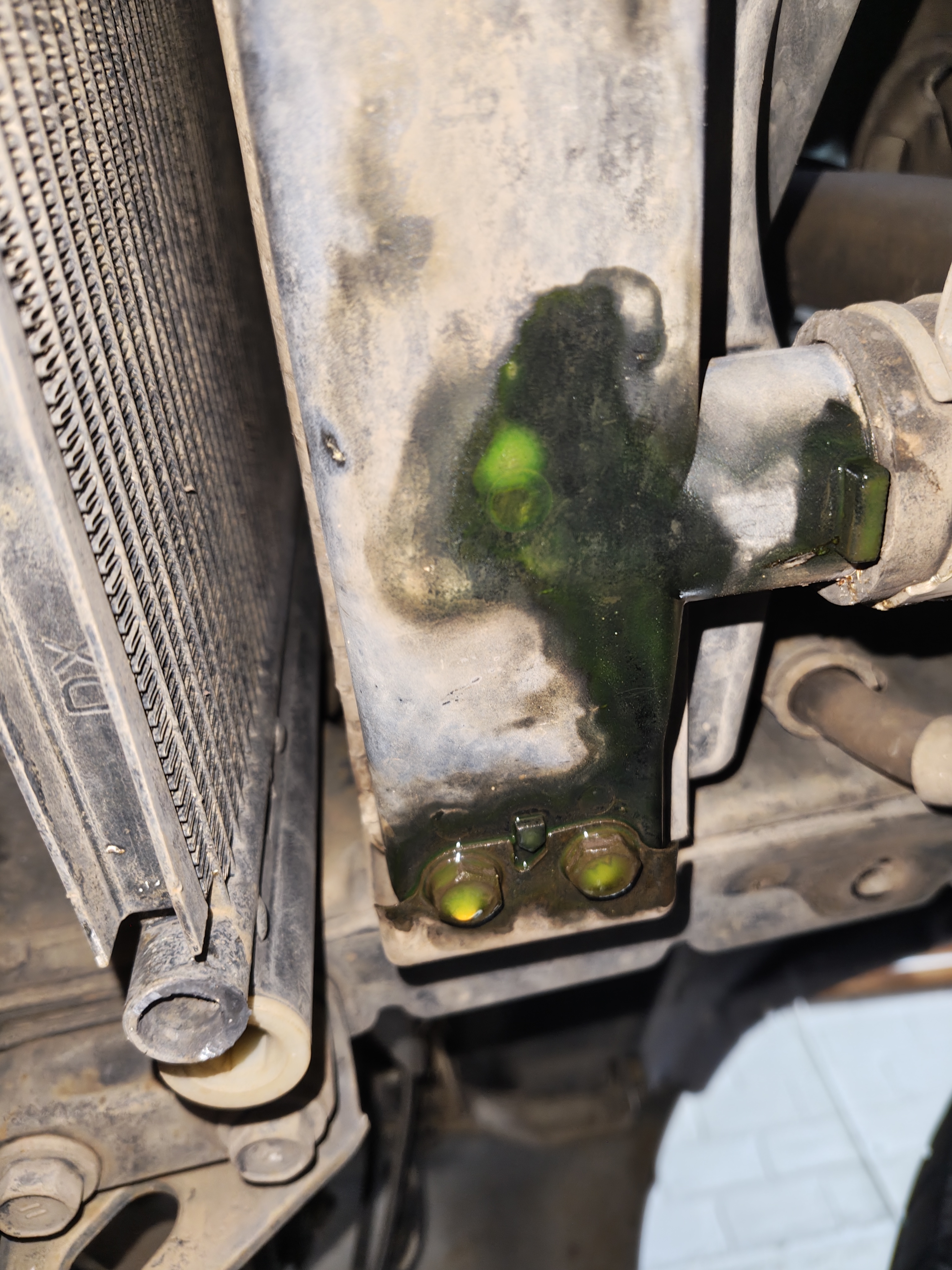
At 8:30 AM, there I was. "We found some problems, boss." The car was leaking three types of oil: a red one (steering), a green one (transmission), and a brown one (engine). I even joked that if the last one were yellow, it would be the Portuguese flag, but they didn't get it.
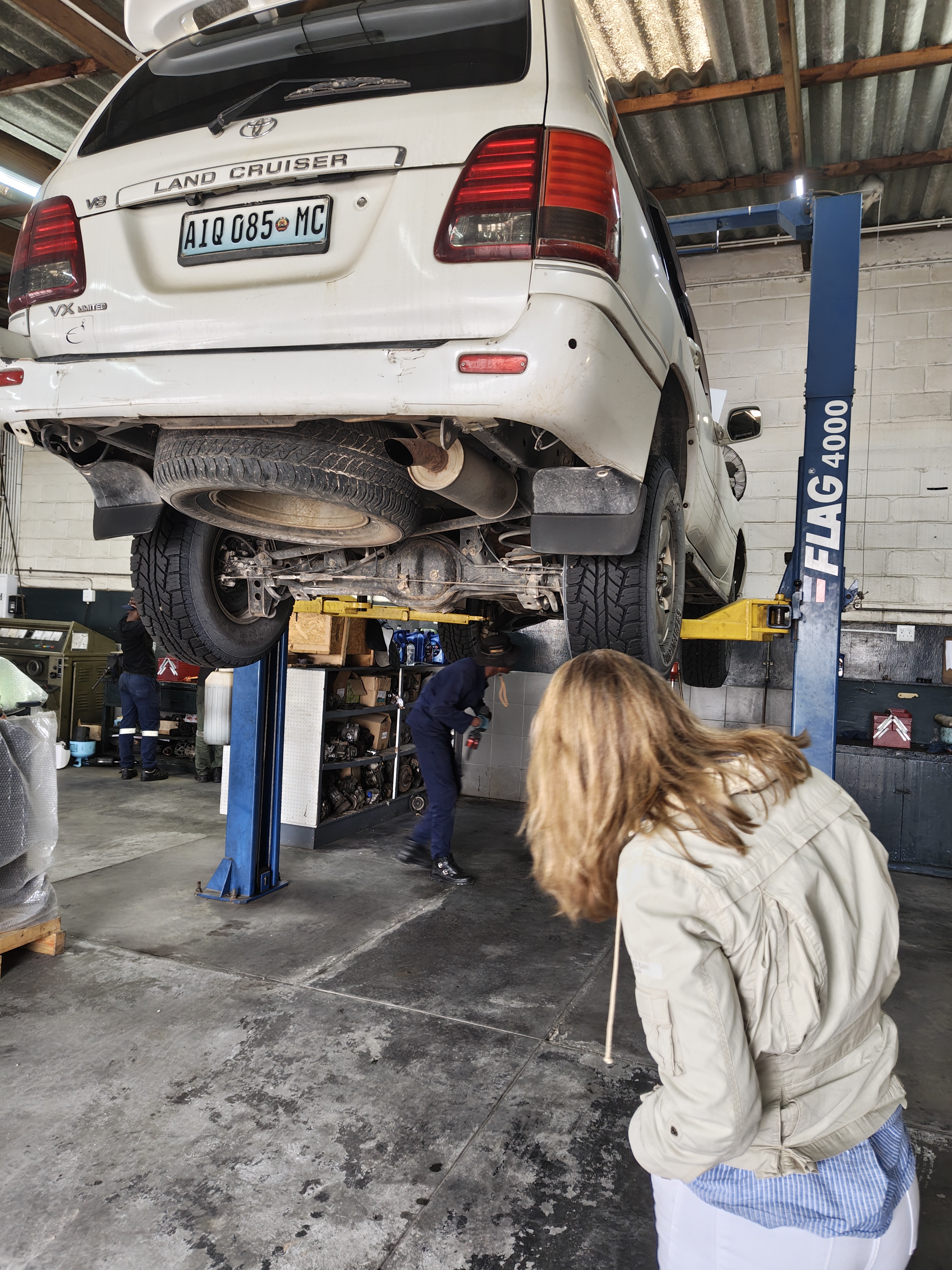
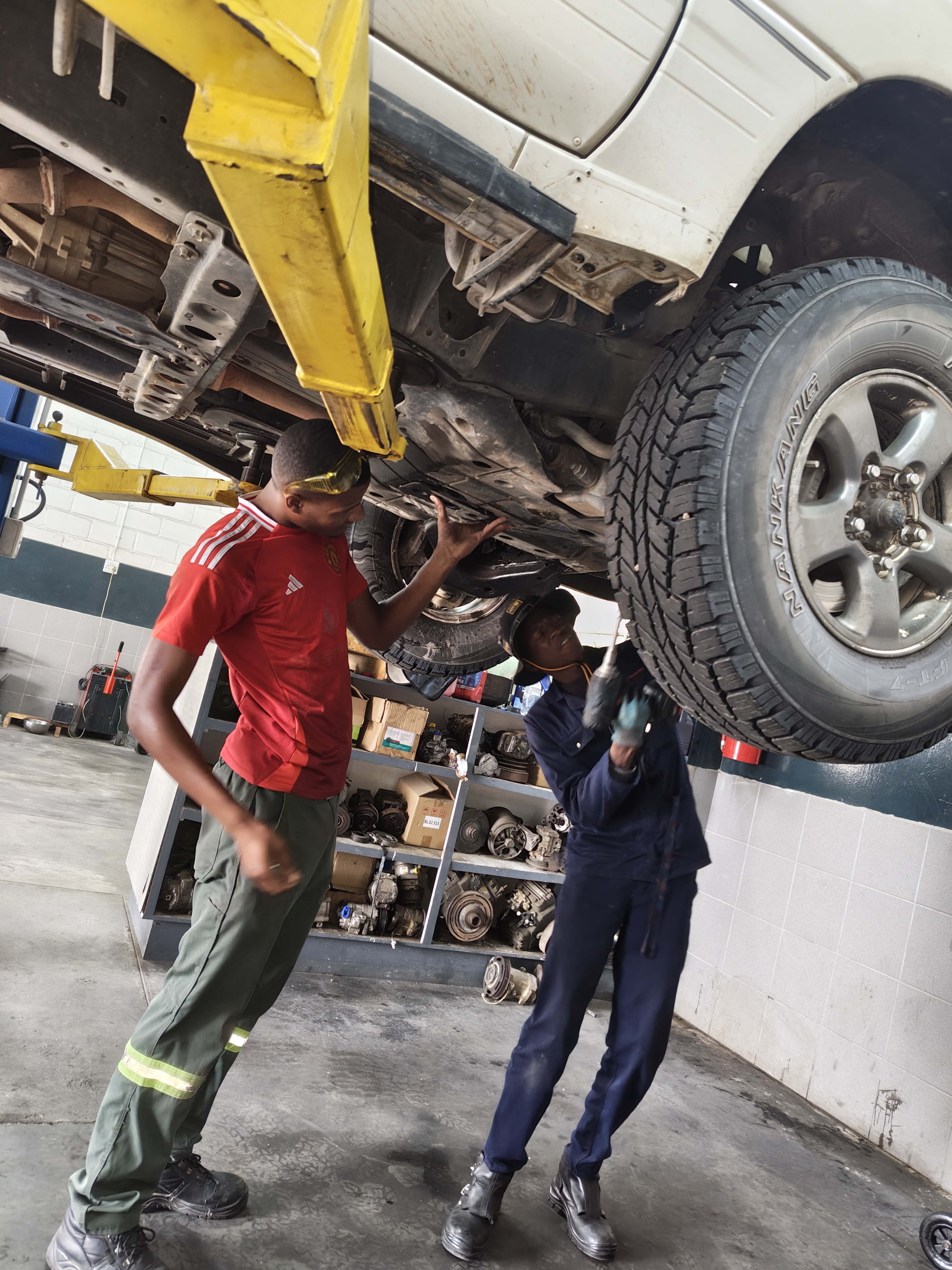
The steering was fine, but I should take it to a mechanic to check these leaks. No sooner said than done, attended by Saki, car on the lift. The rainbow of oils was confirmed. "Is it serious?" I asked. "Not too serious," Saki said. I bought the respective coloured oils and topped them up. I'll have to keep an eye on it and carry spares for refills.
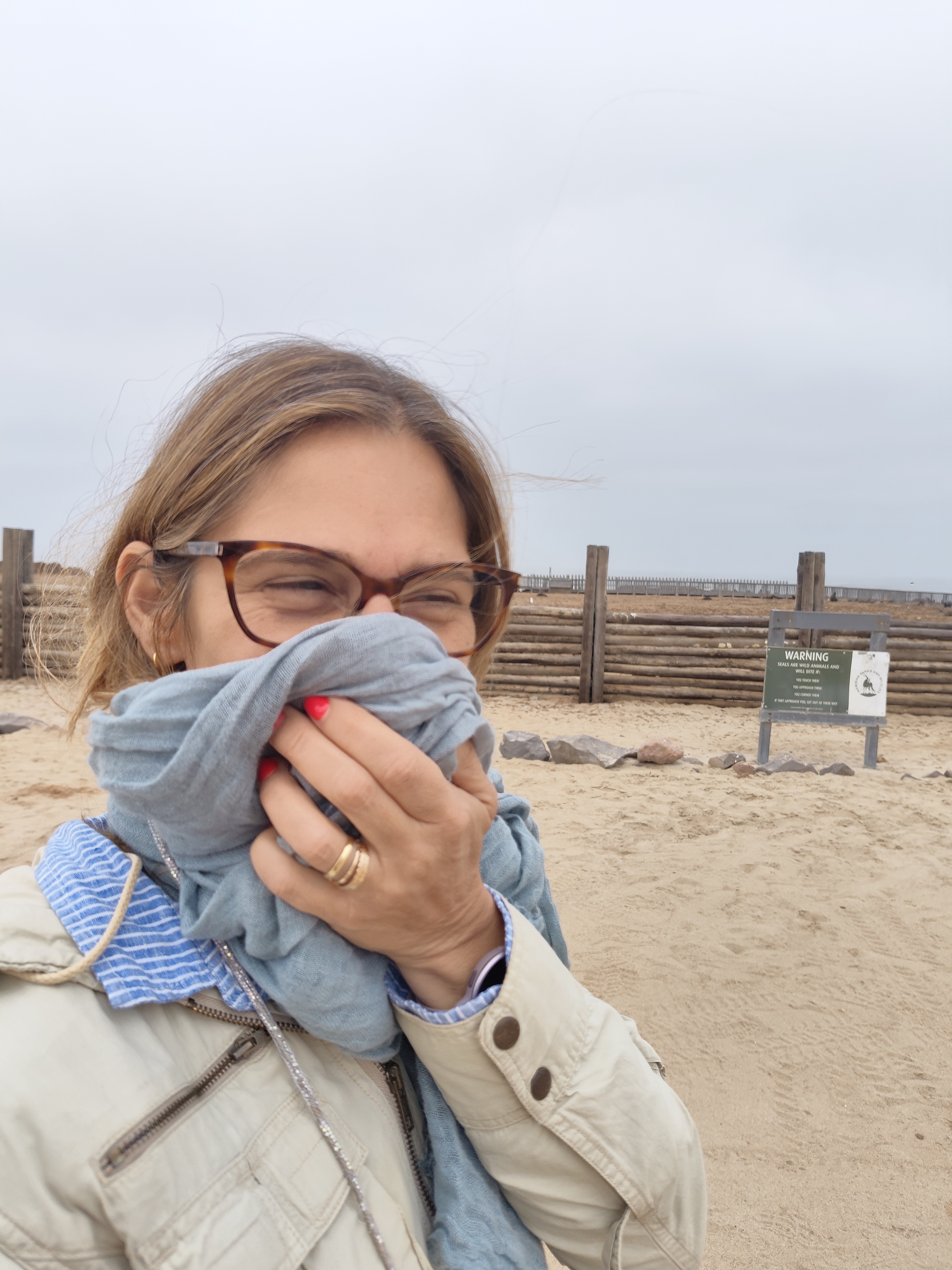
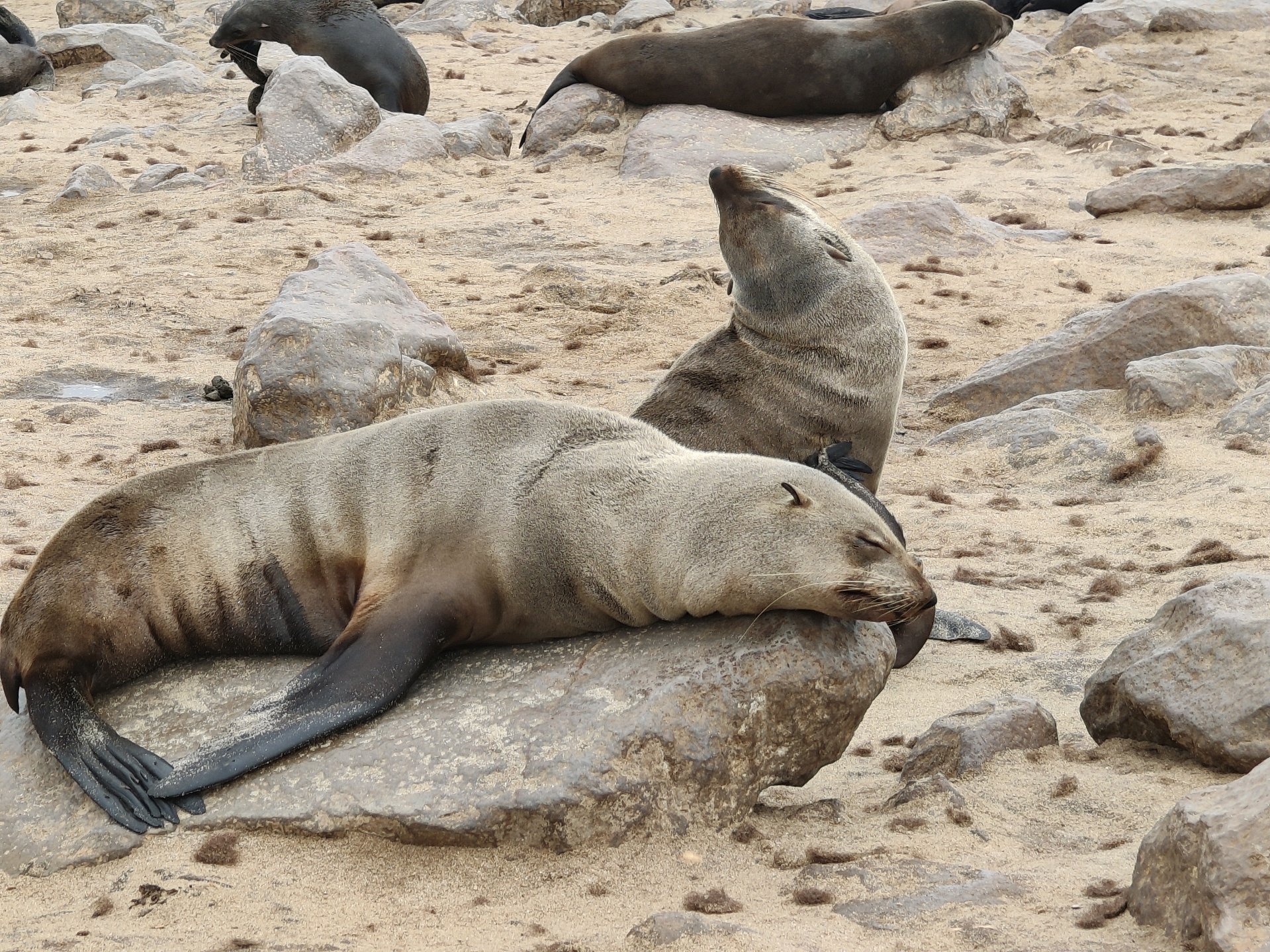
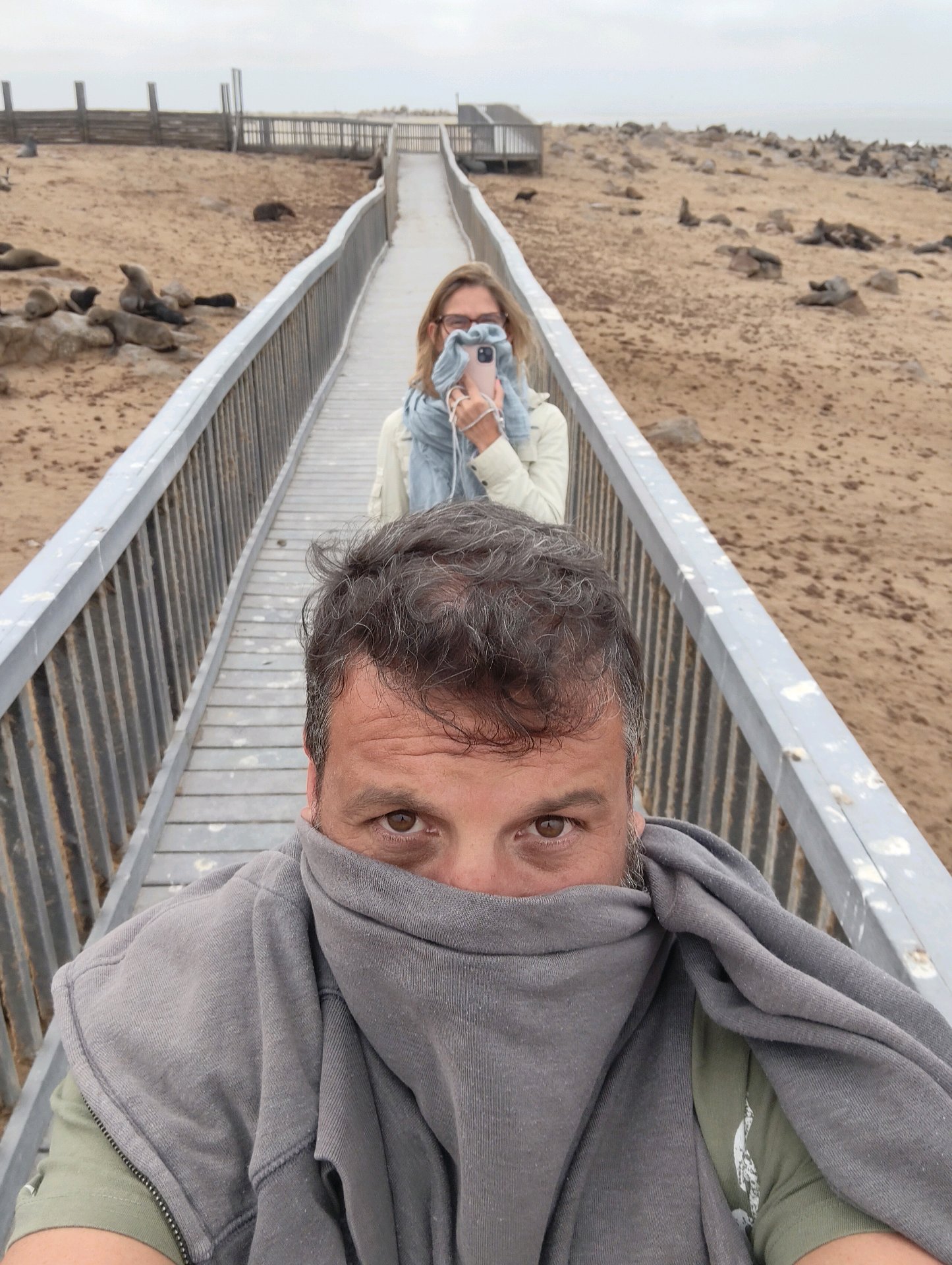
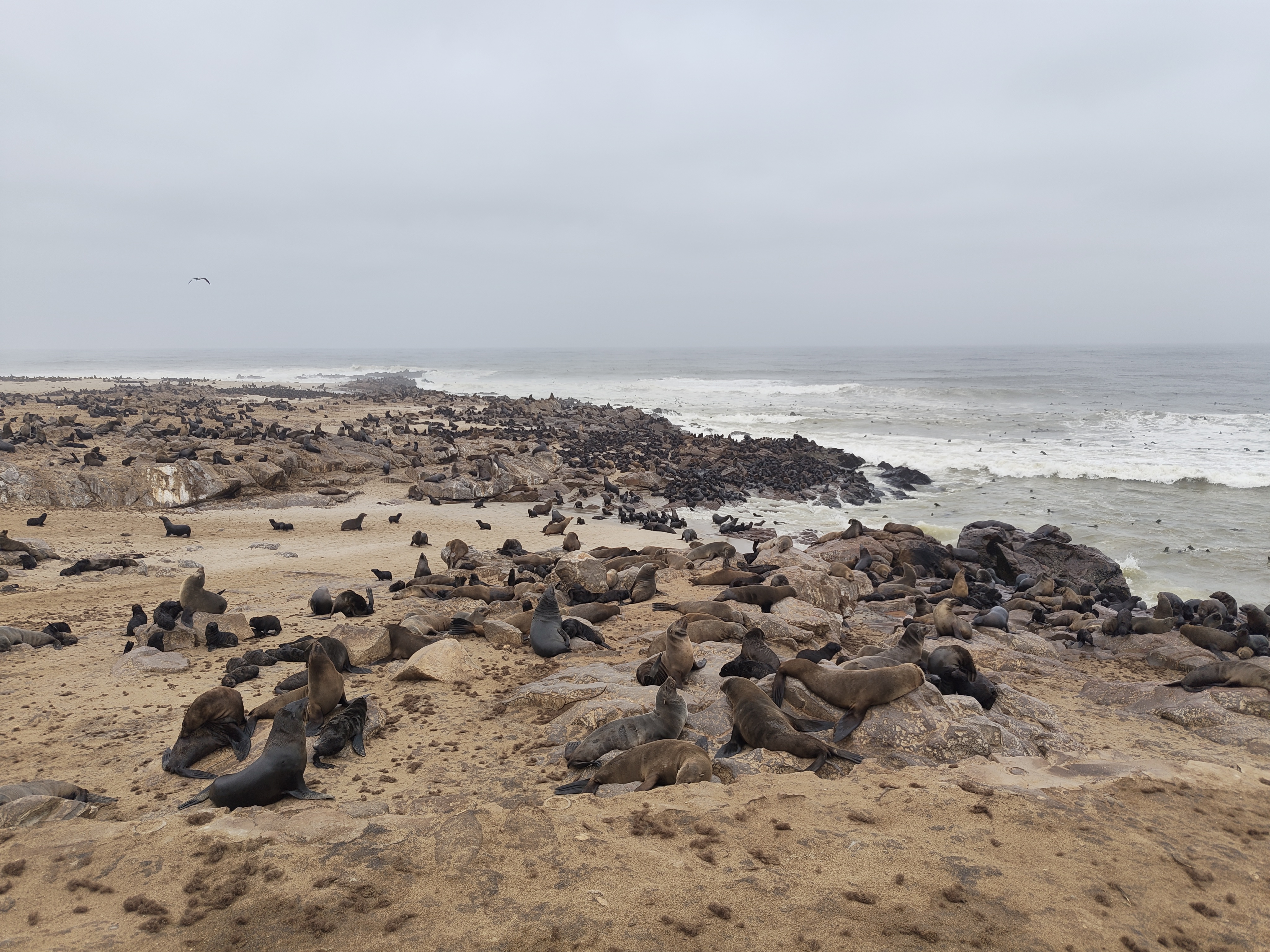
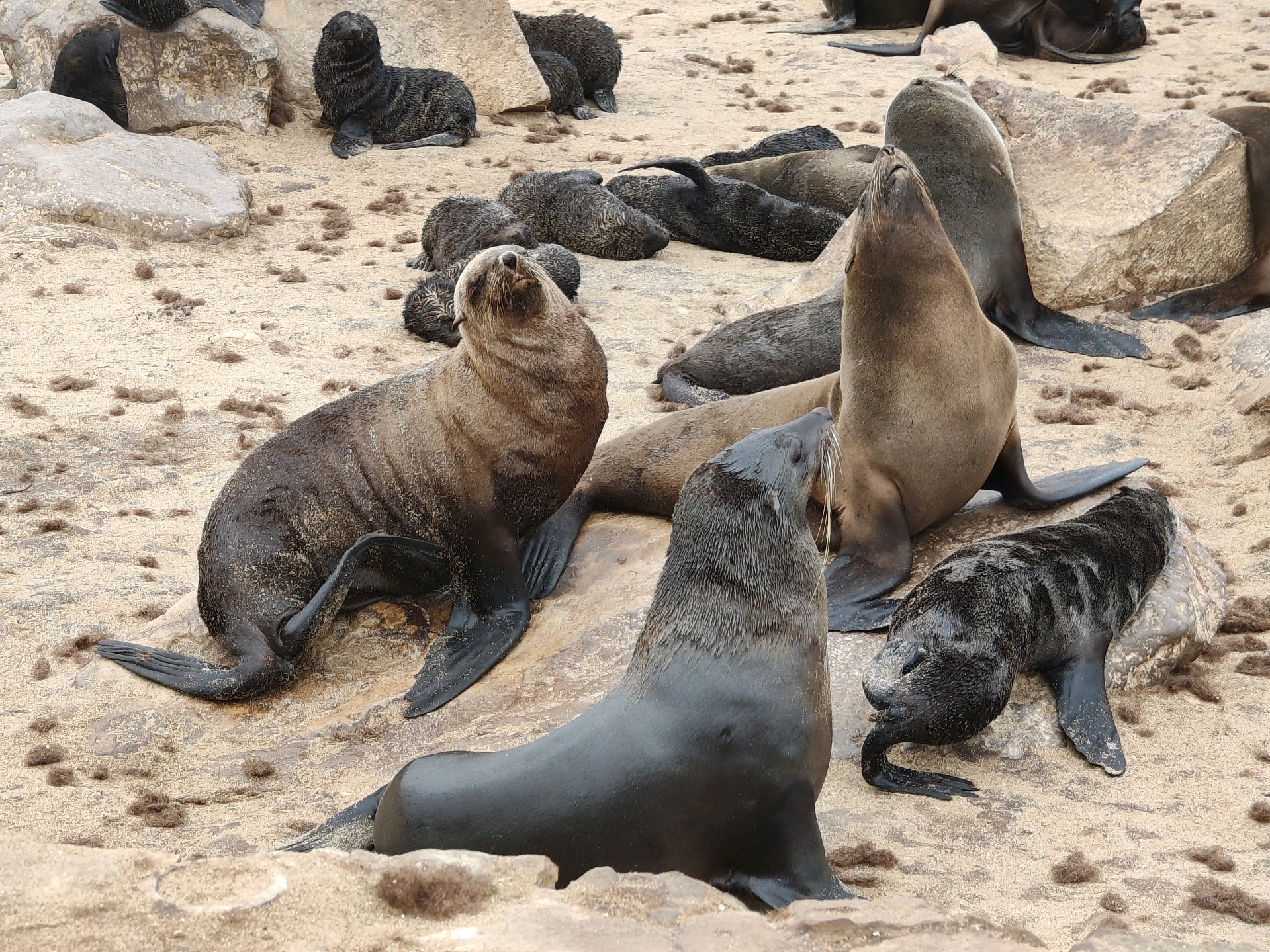
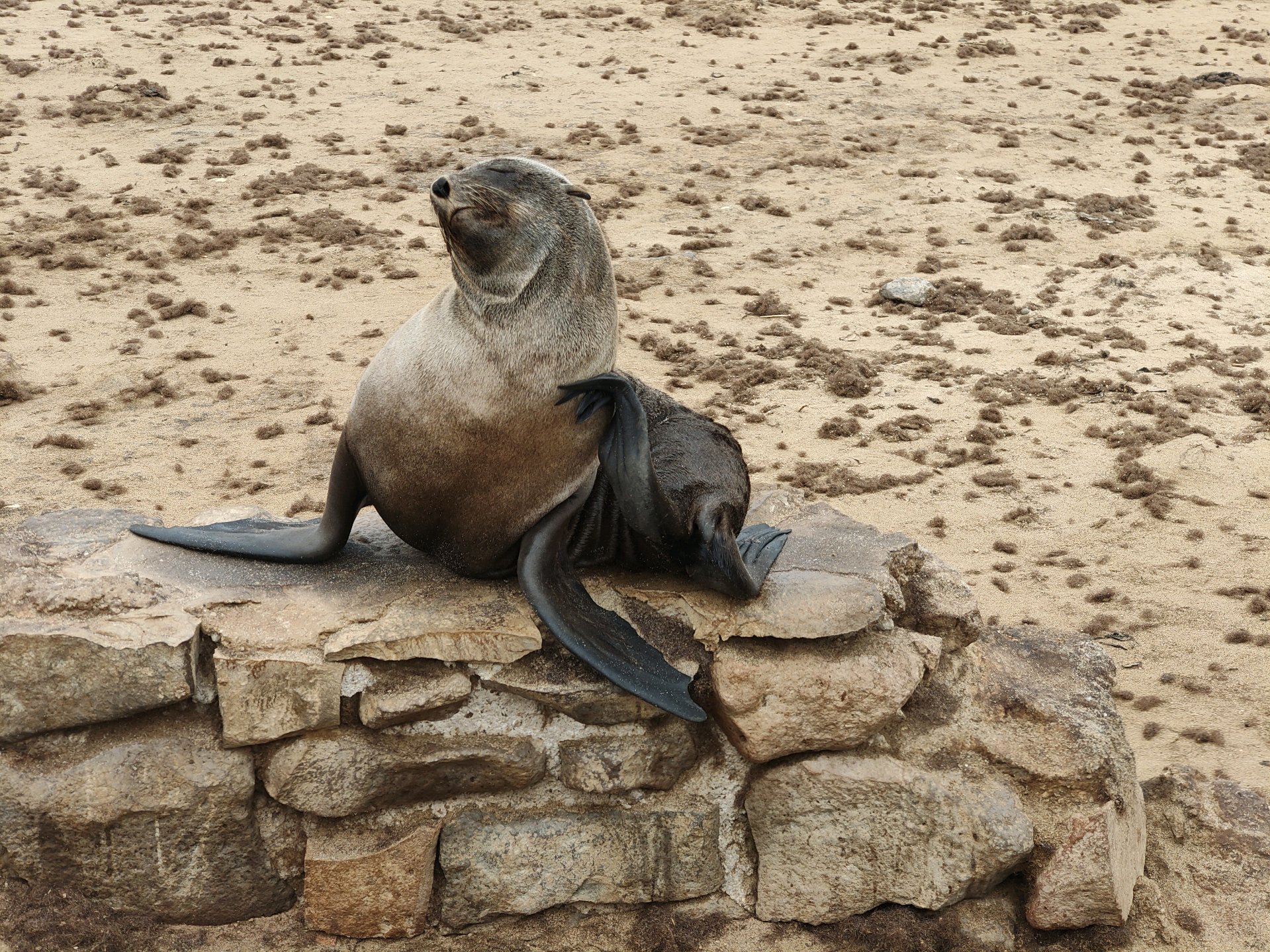
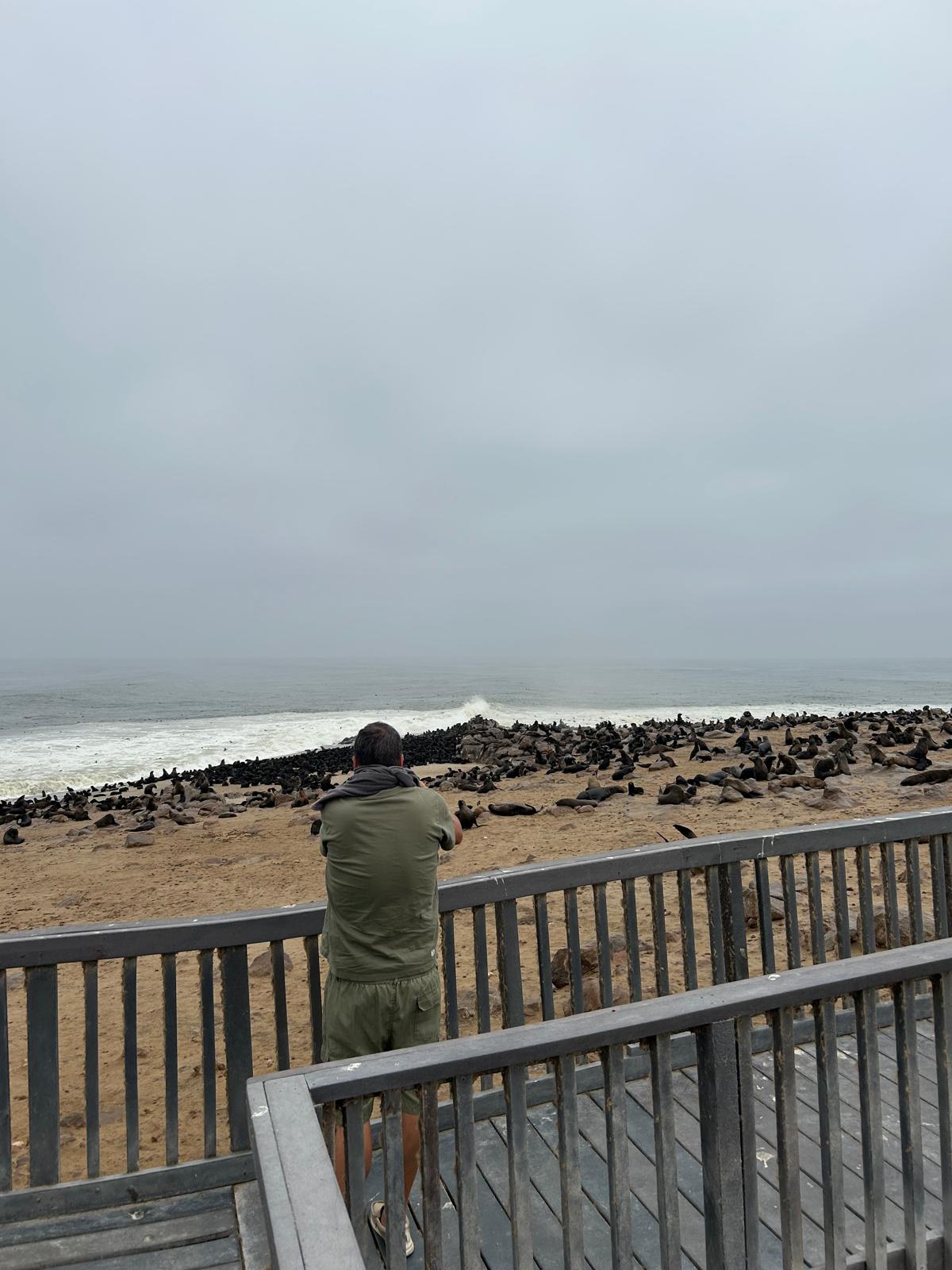
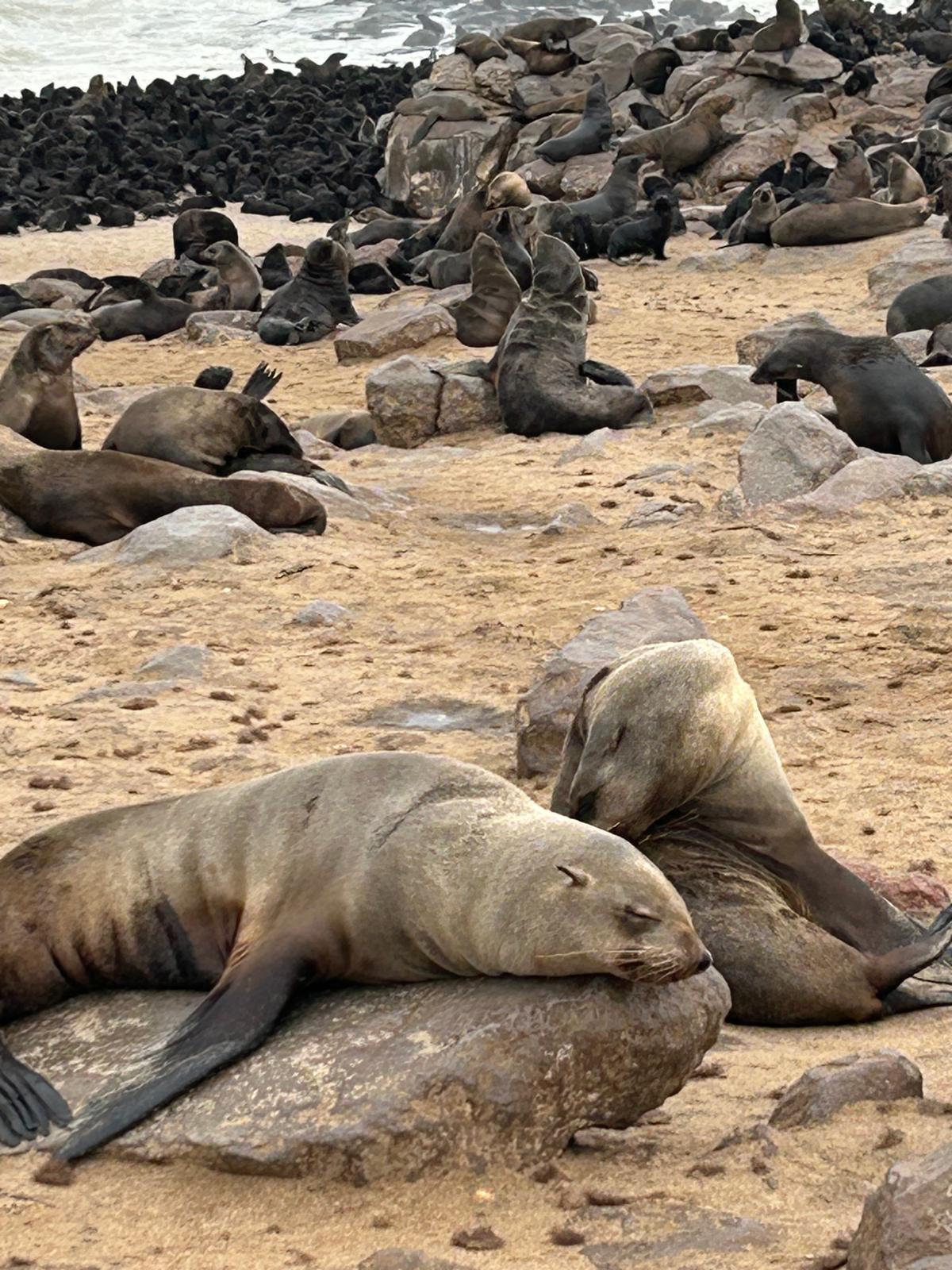
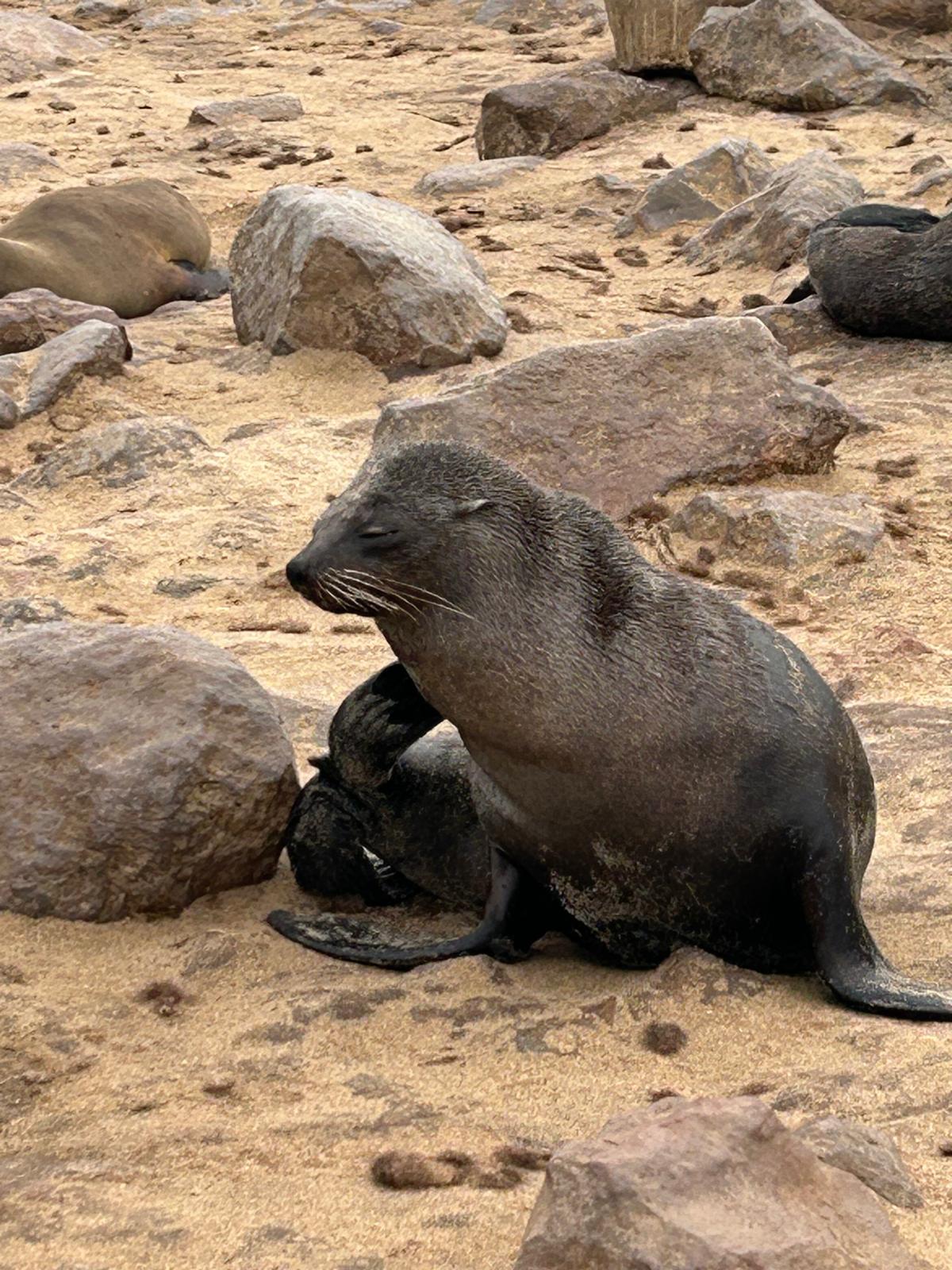
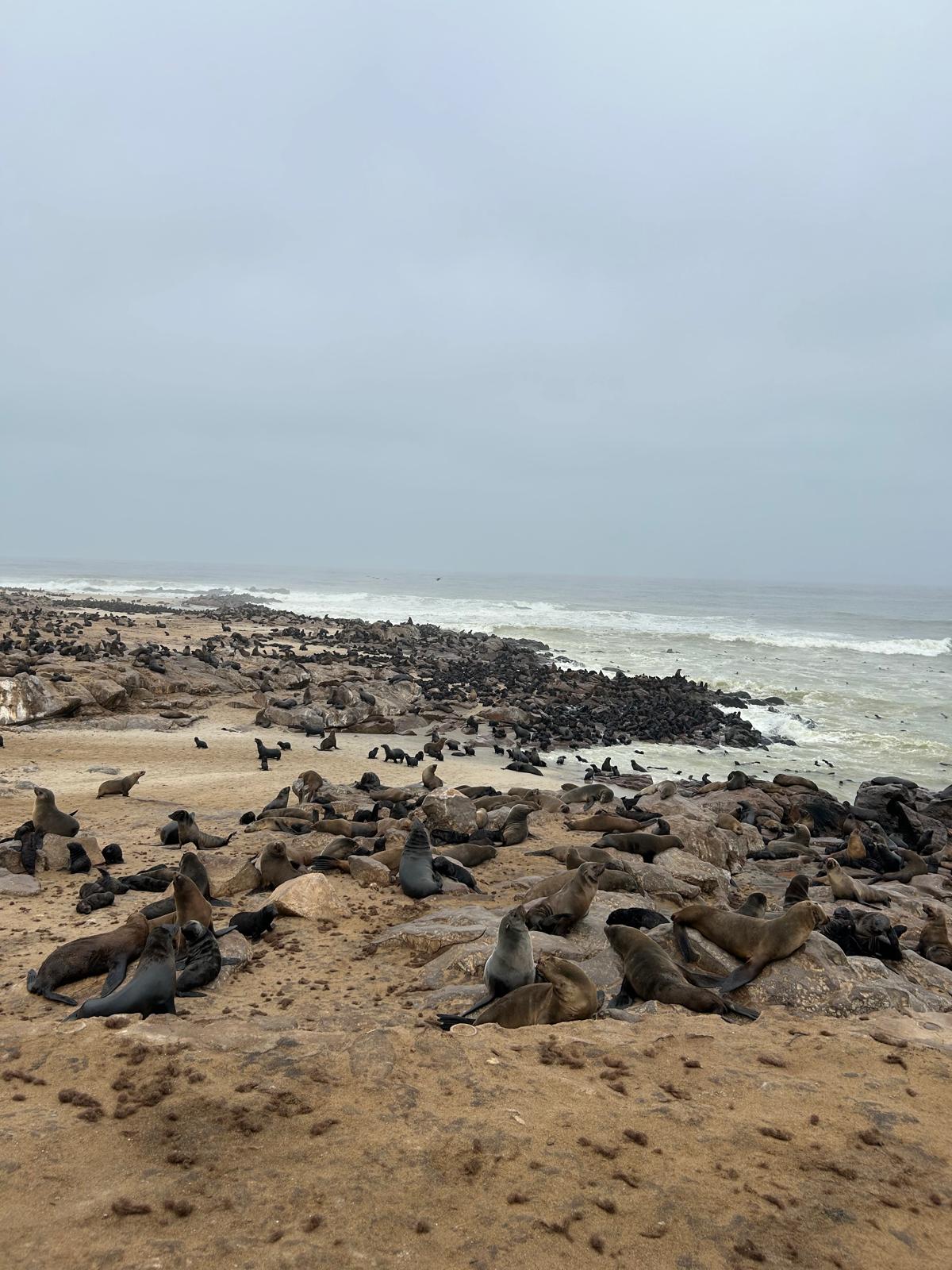
We left, already late, for Cape Cross. We stopped in Henties Bay for a coffee. At Cape Cross, a seal colony awaited us. They say there are 300,000. I didn't count. But judging by the smell, some must have been dead for a while.
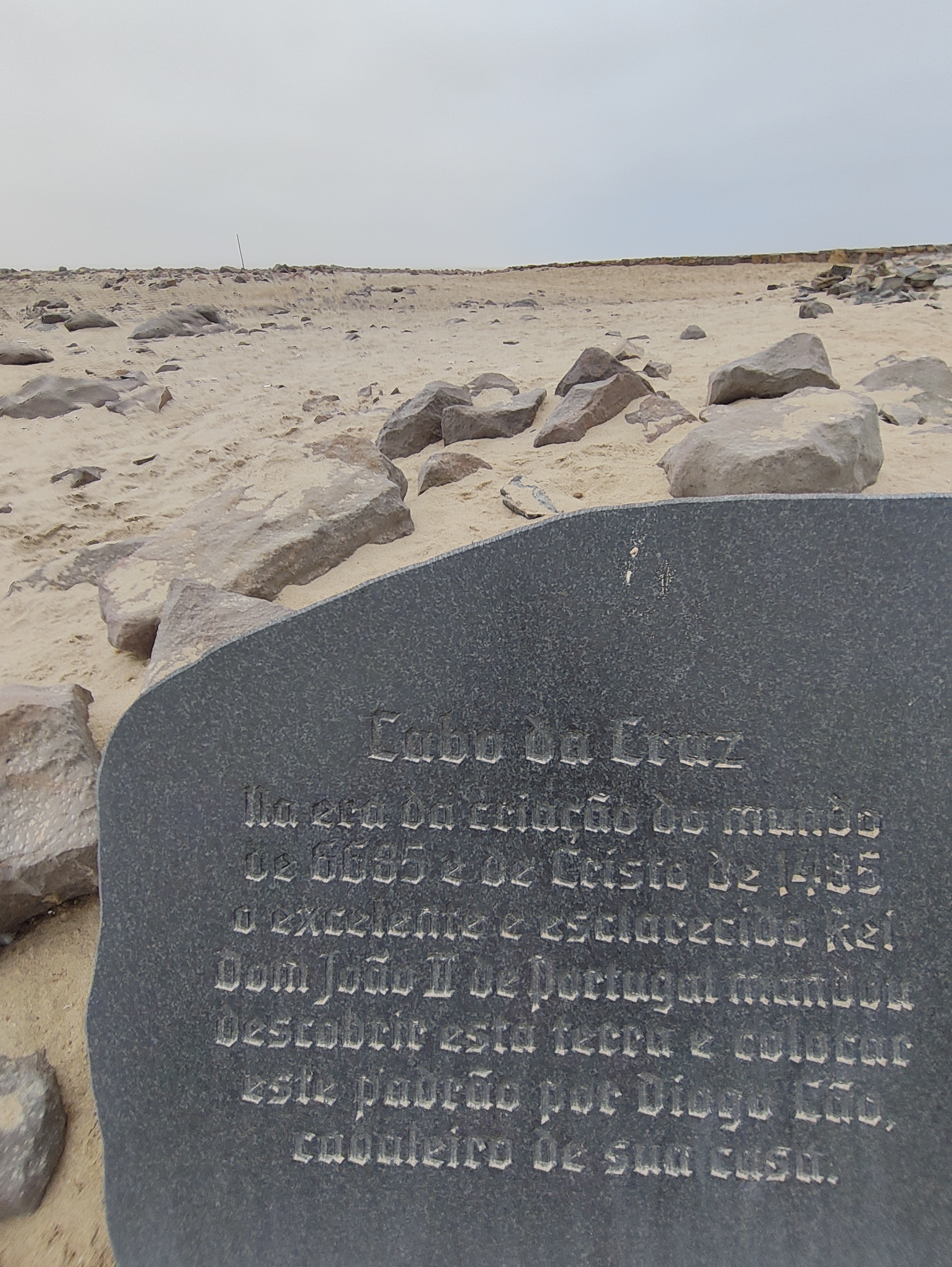
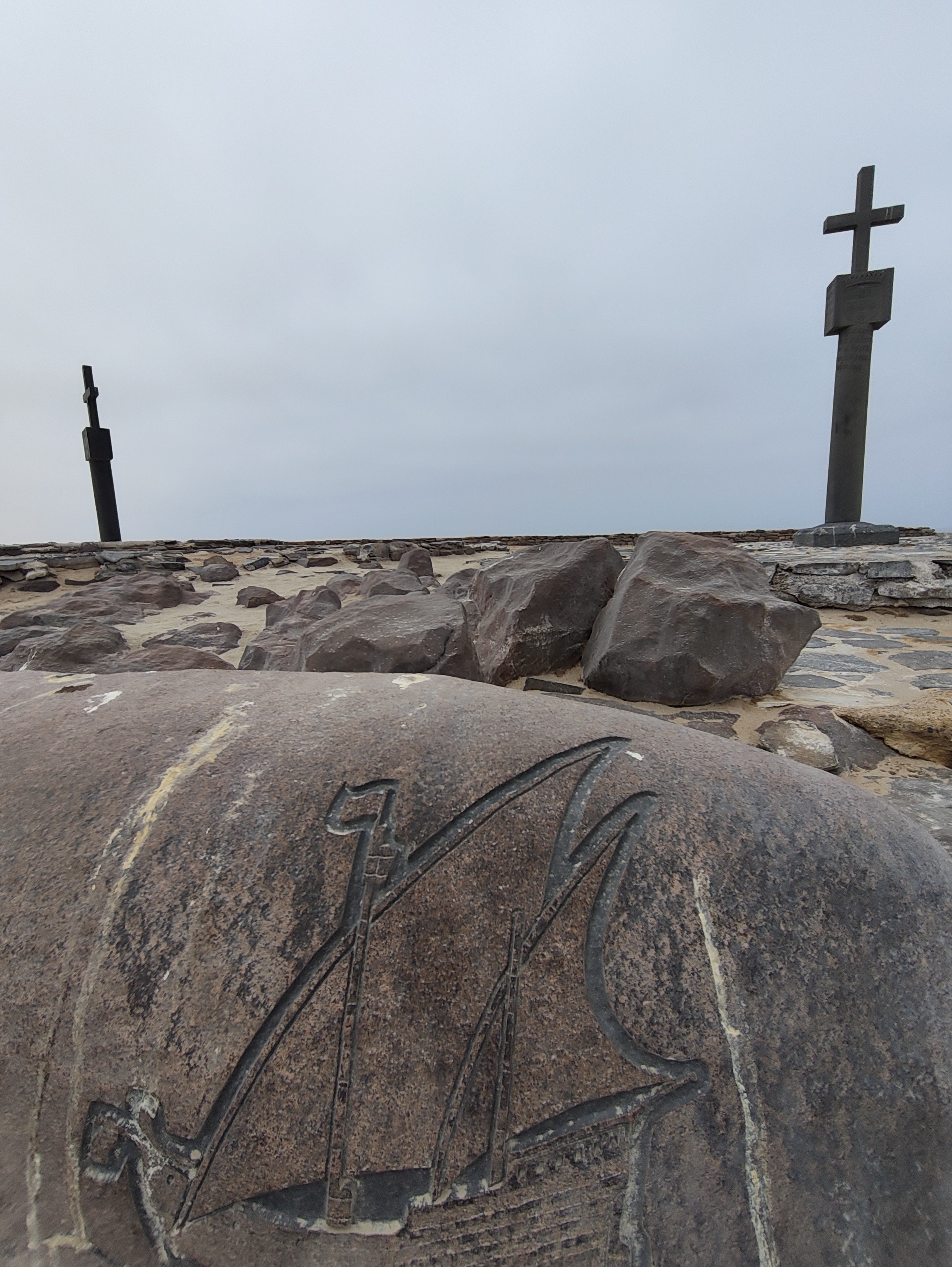
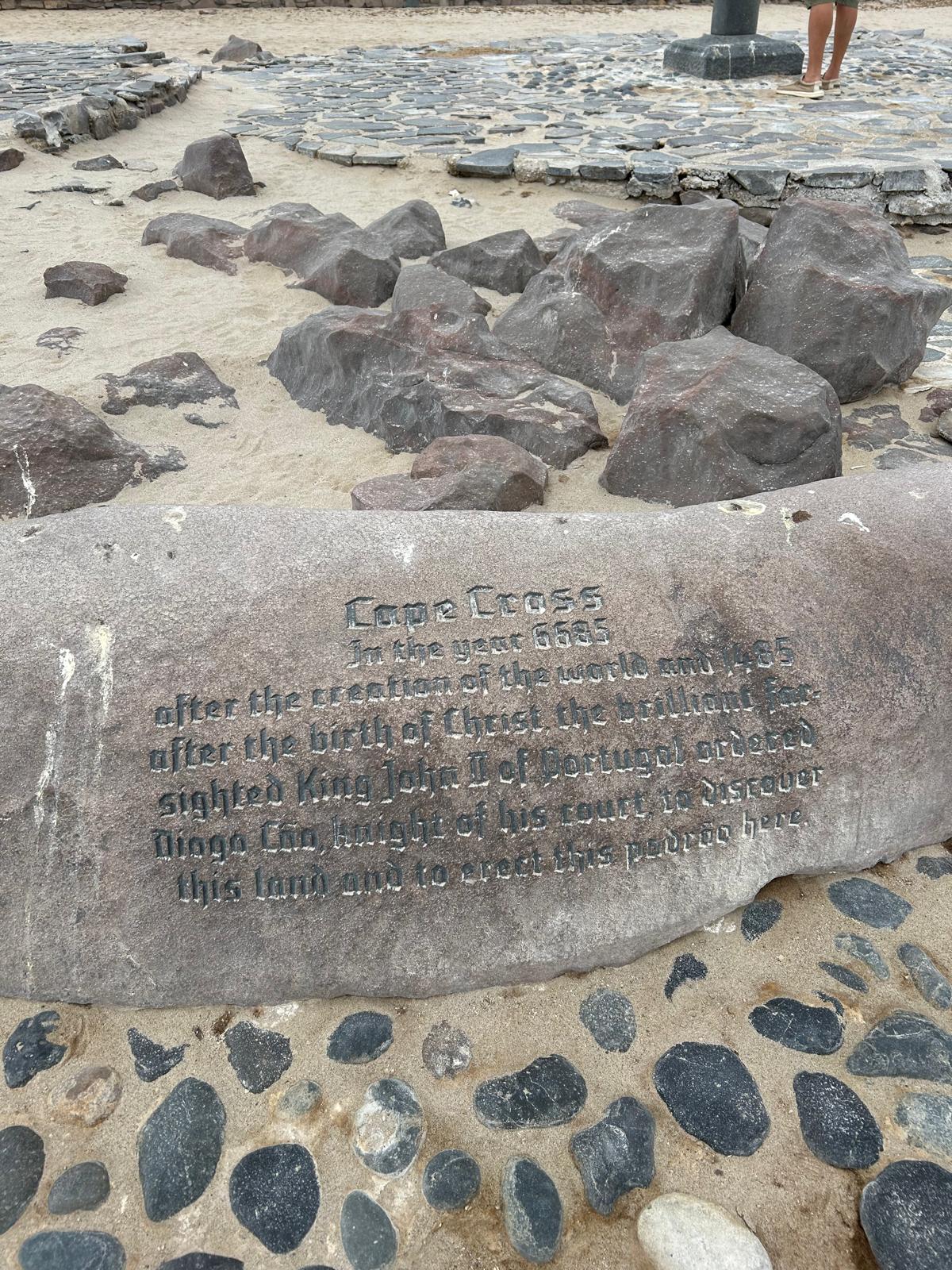
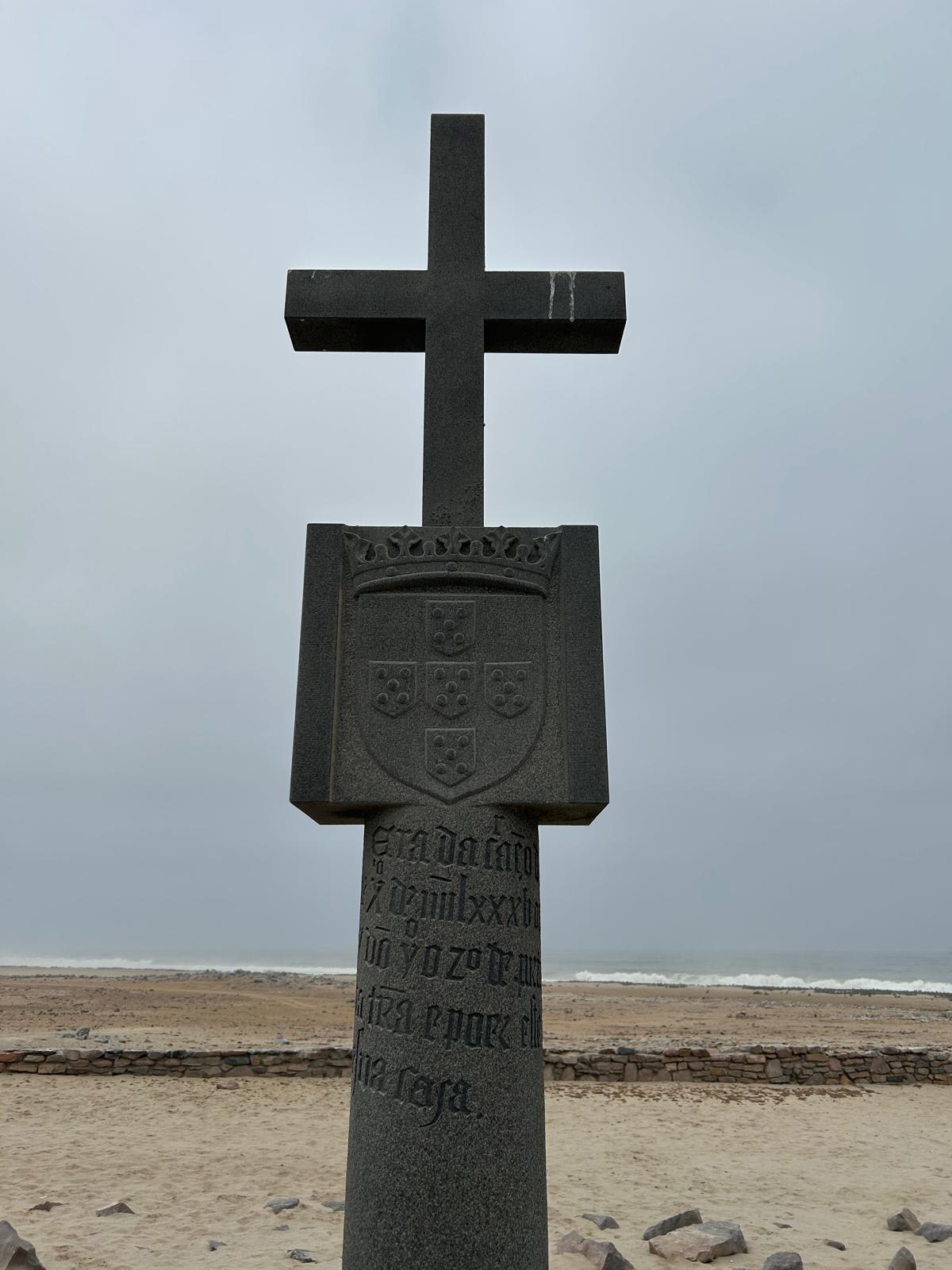
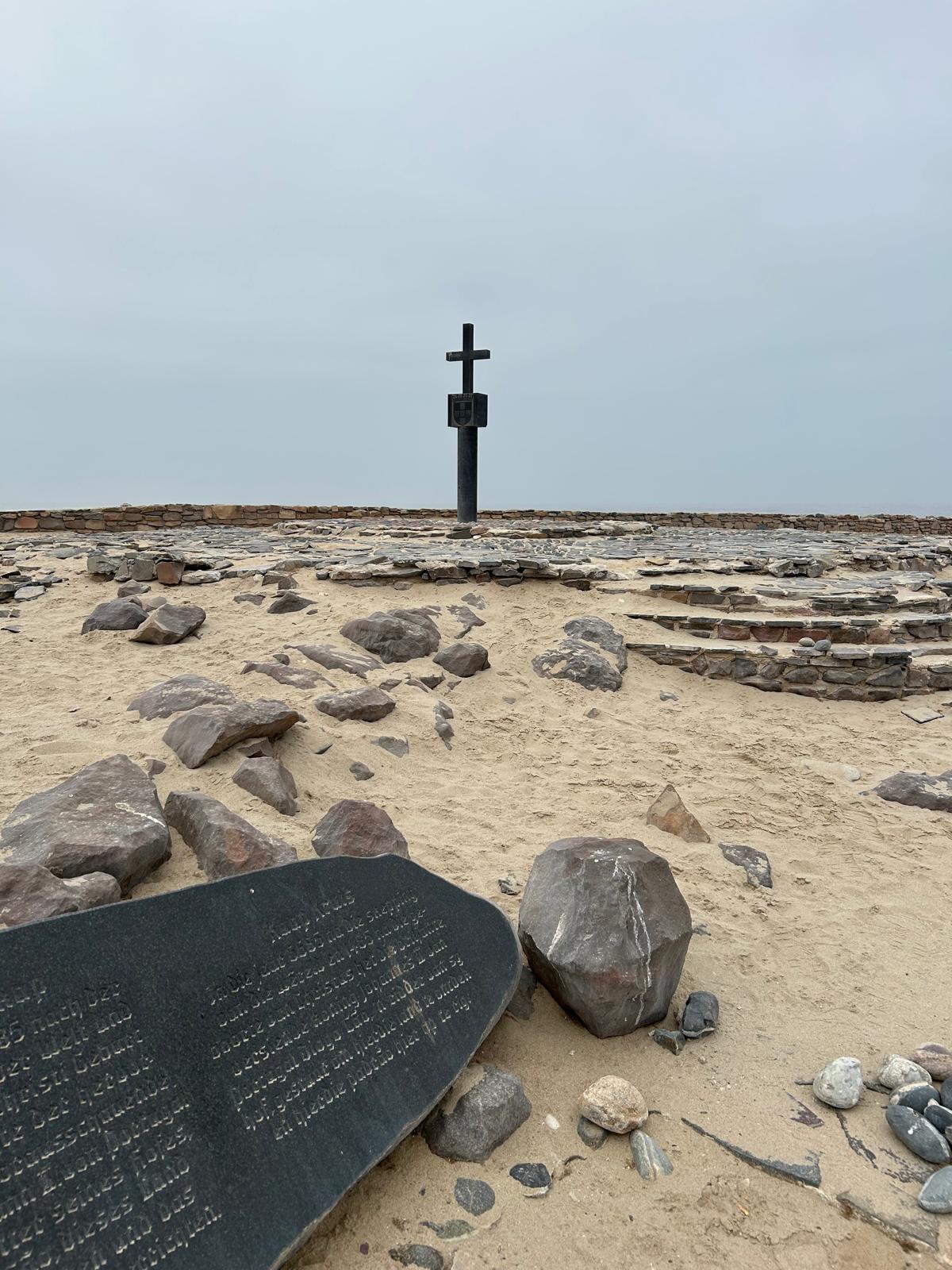
Next to it, a tribute to Diogo Cão, who is said to have been the first European to arrive here and had a cross erected, hence the name of the place.
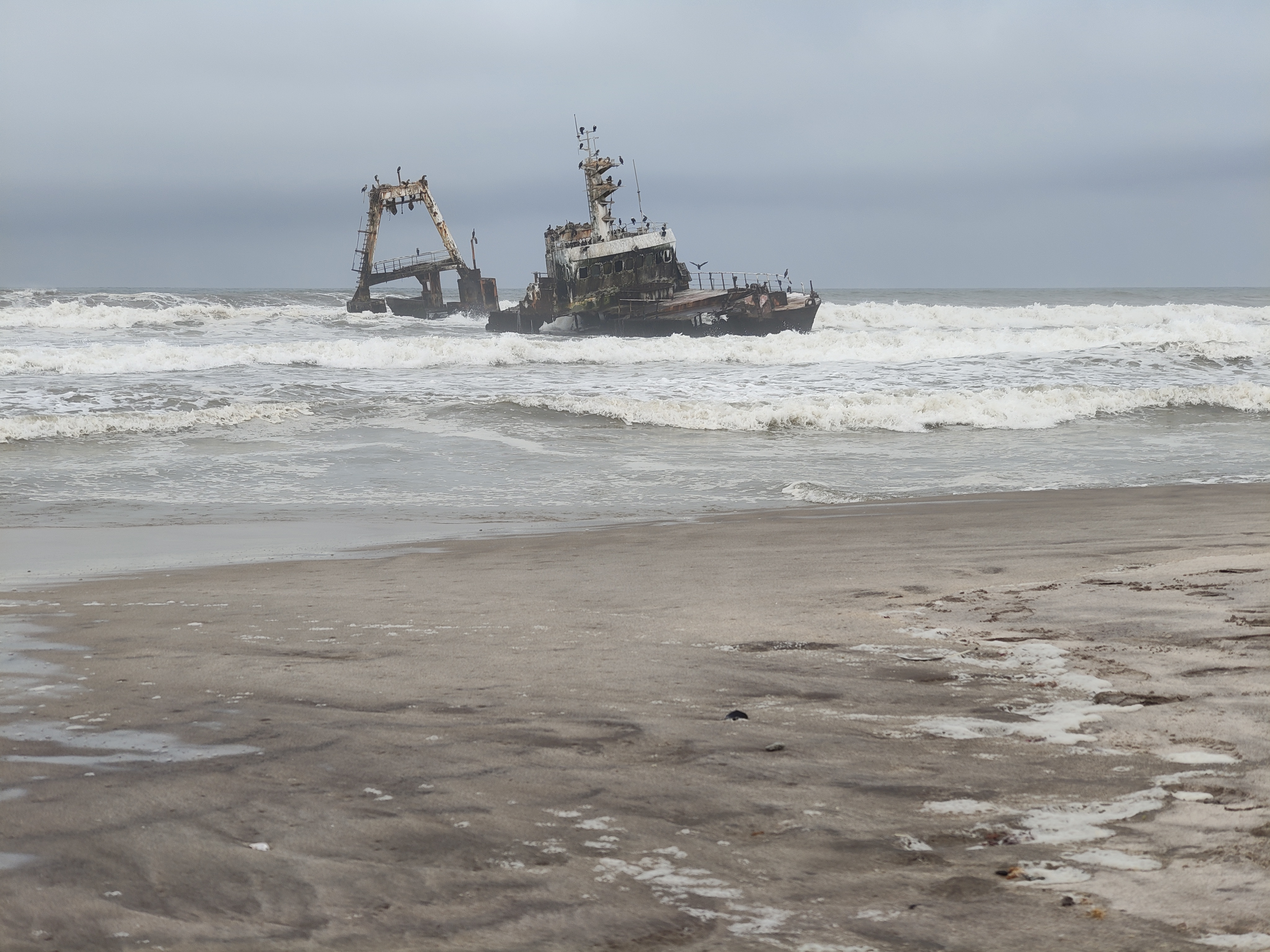
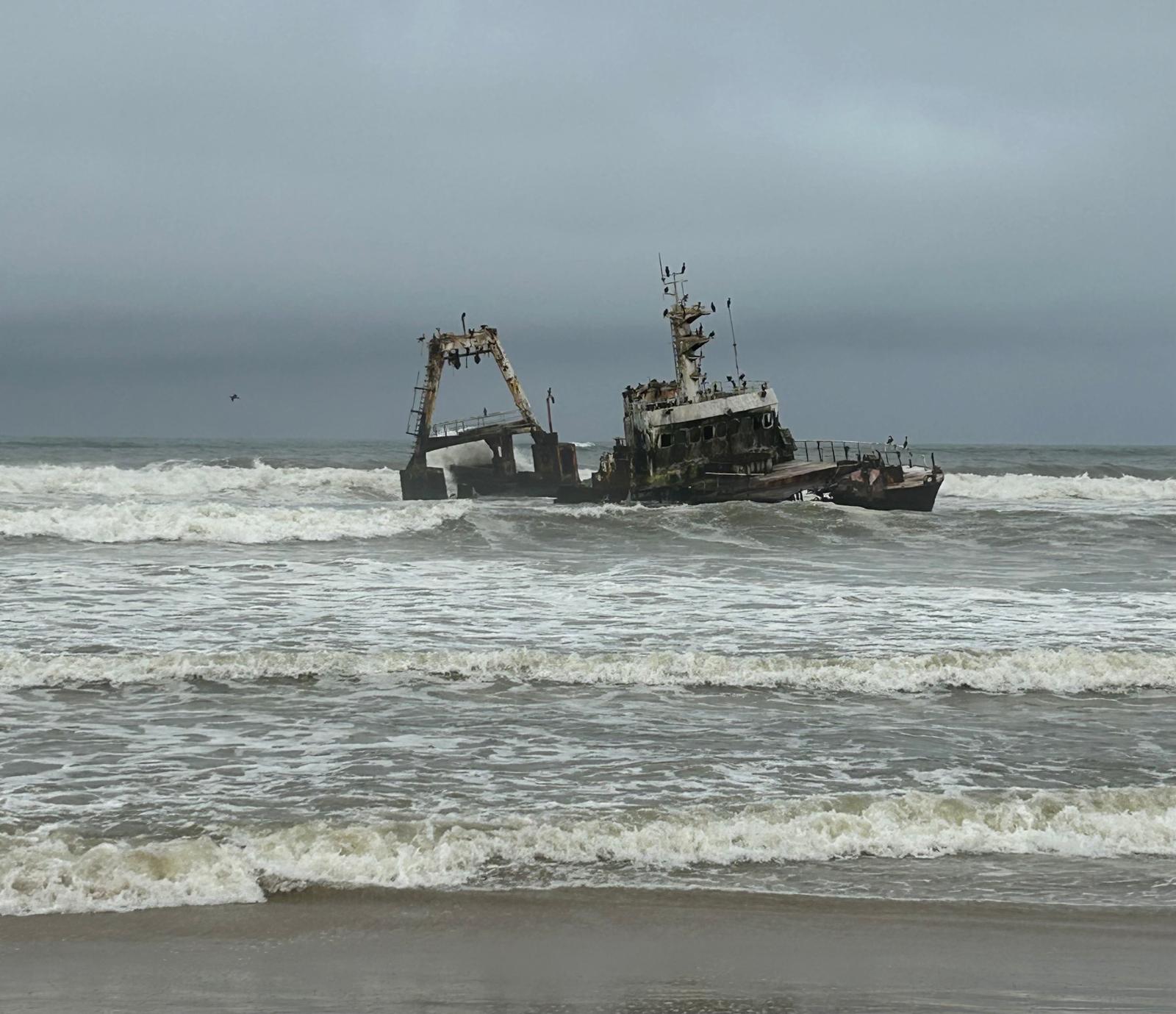
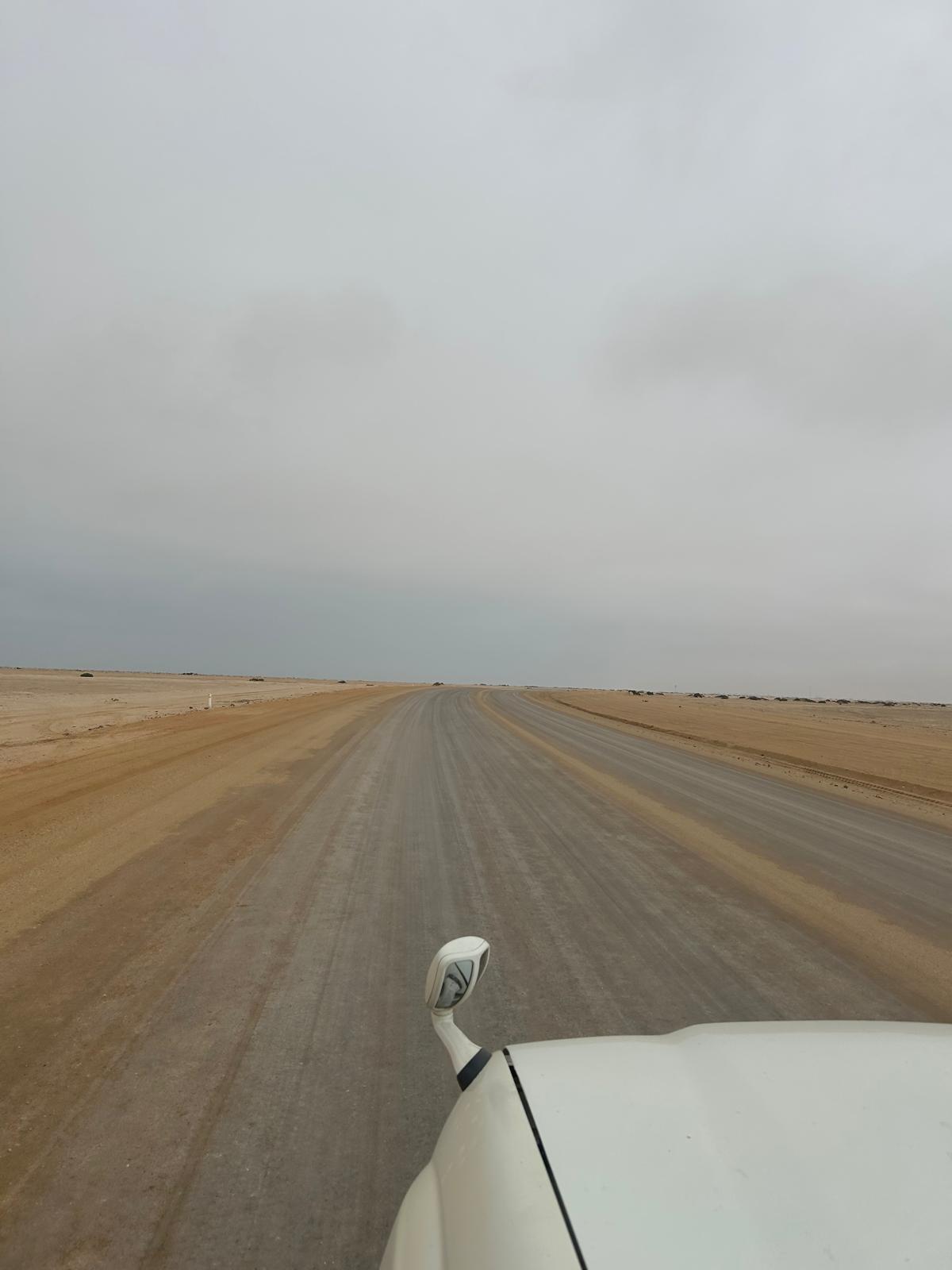
The Skeleton Coast is known as such for several reasons, the main one being the numerous shipwrecks that have run aground there over 500 years. There's one currently 400 meters from the coast, stuck in the middle of the desert, but we didn't go to see it. It was much further north.
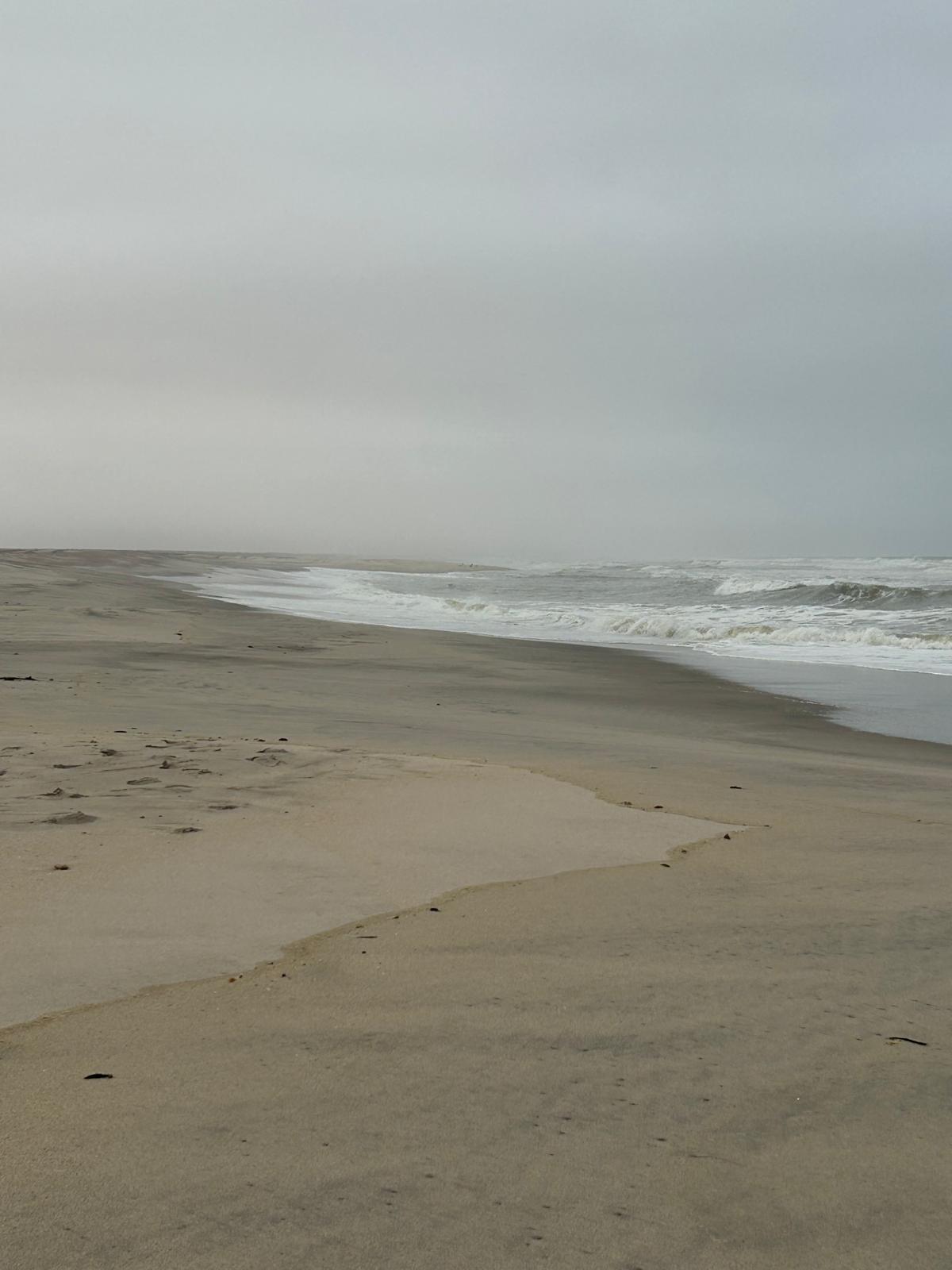
It's a somewhat depressing landscape, with a constant mist that bears witness to an relentless struggle between the sea and the desert. I'd say the desert is winning. If that ship is already 400 meters from the sea, I must be right. It is, without a doubt, one of Namibia's main attractions, stretching from there to the Angolan border. When I planned the trip, I was a bit sad not to go further north along the Skeleton Coast, but I had to prioritise.
I imagined the shipwrecked sailors who, stranded, found themselves safe on land, but trapped between a turbulent South Atlantic sea and a desert stretching as far as the eye could see, in desperate and hopeless anguish.
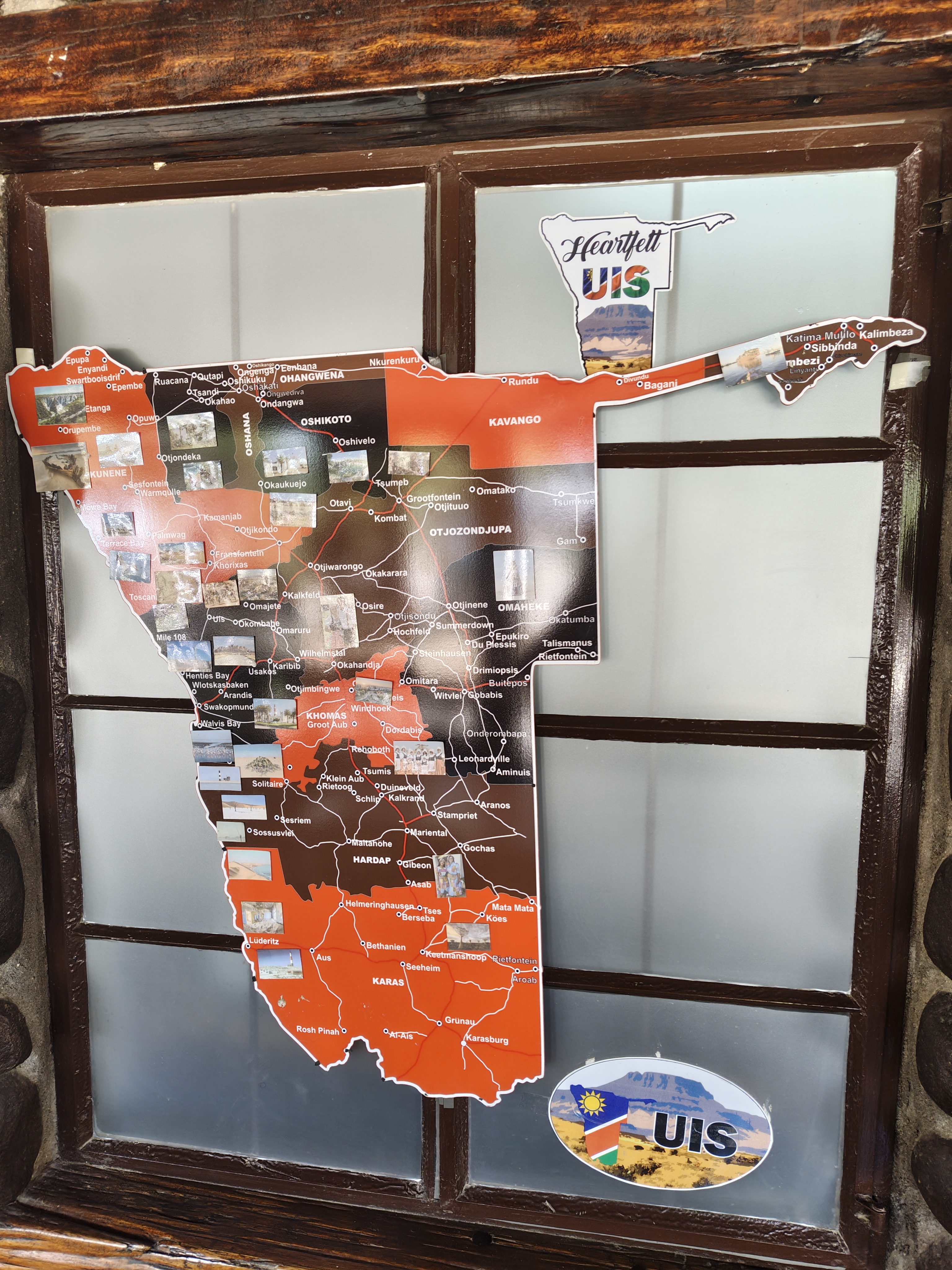
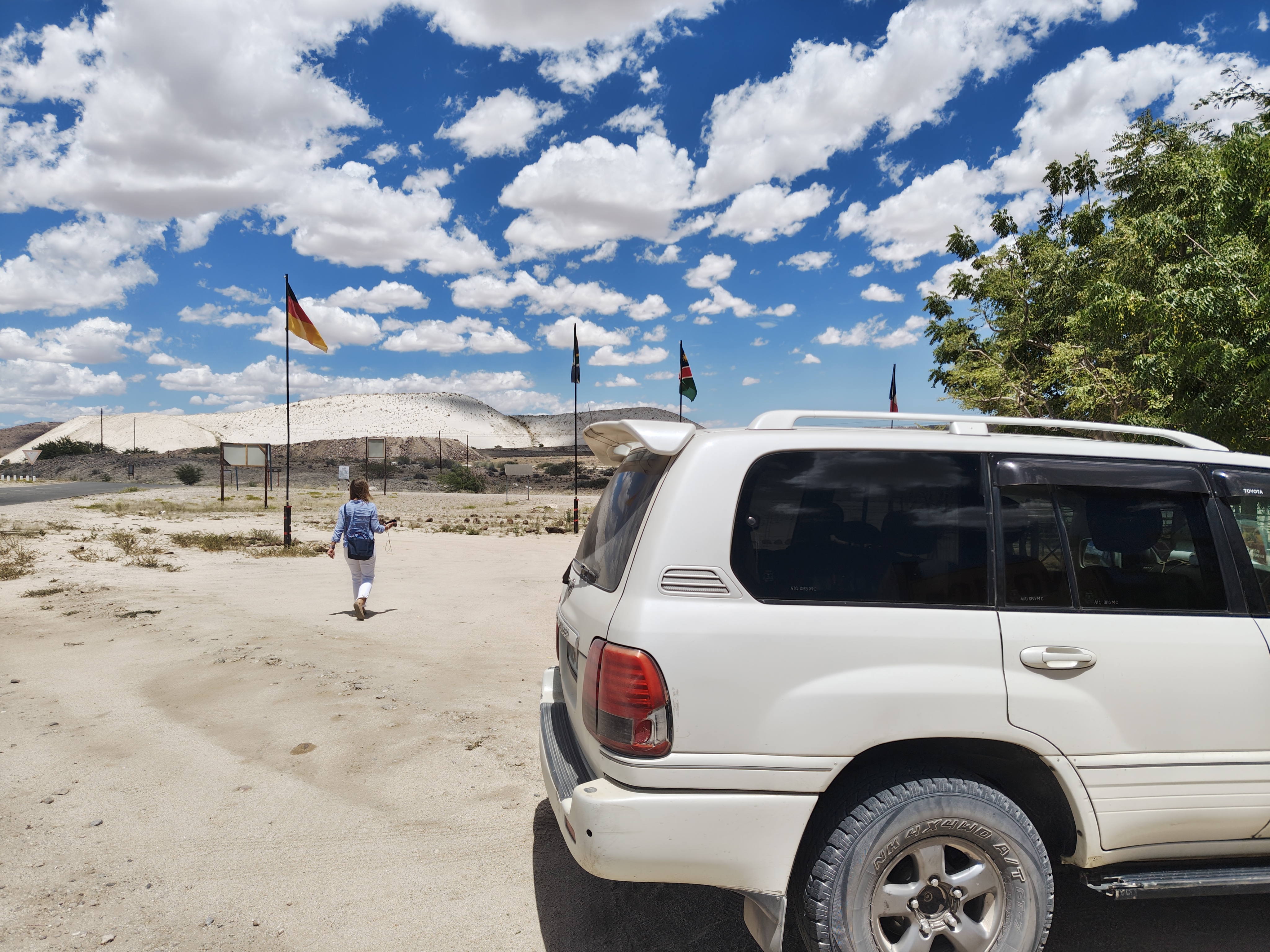
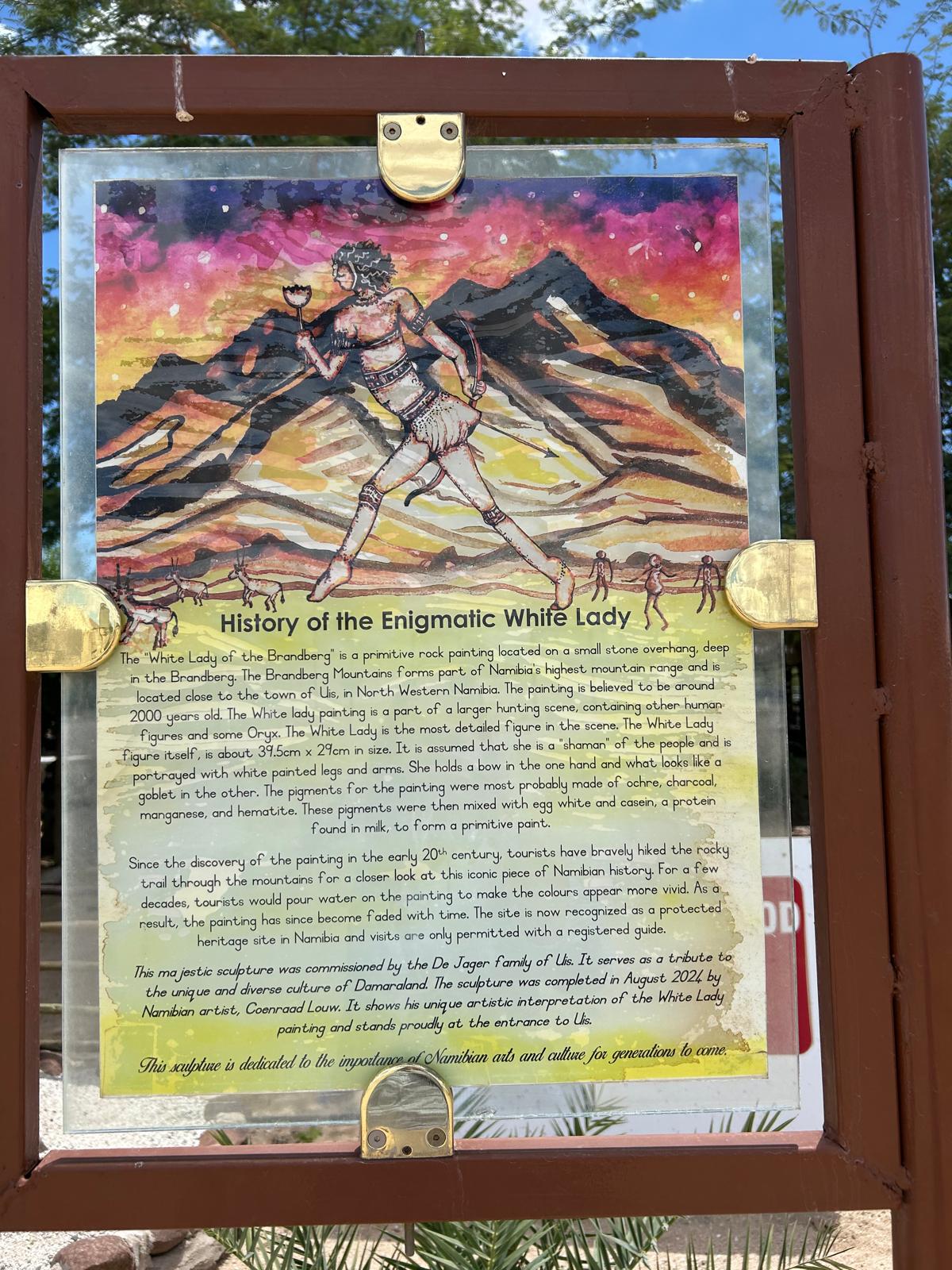
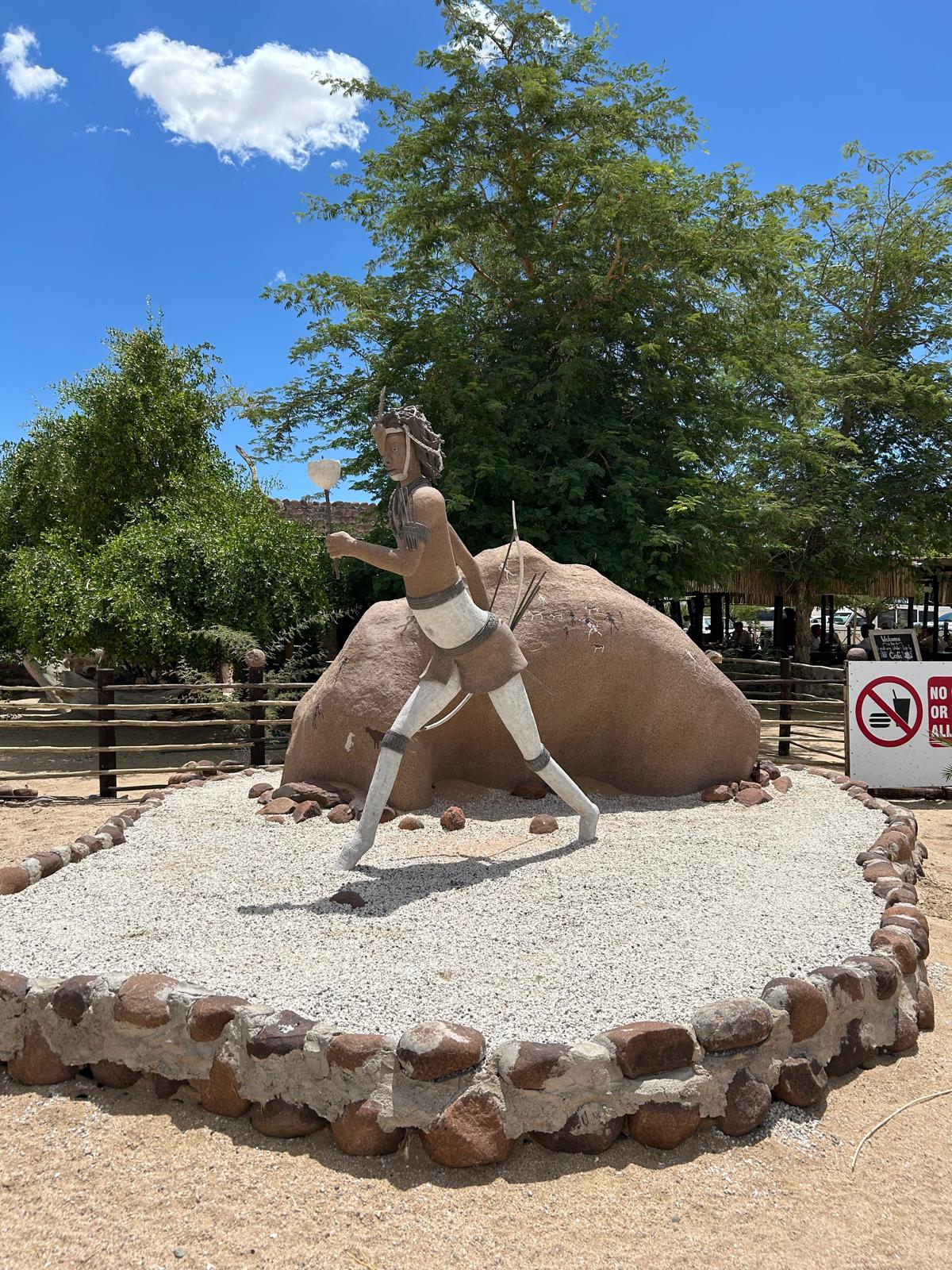
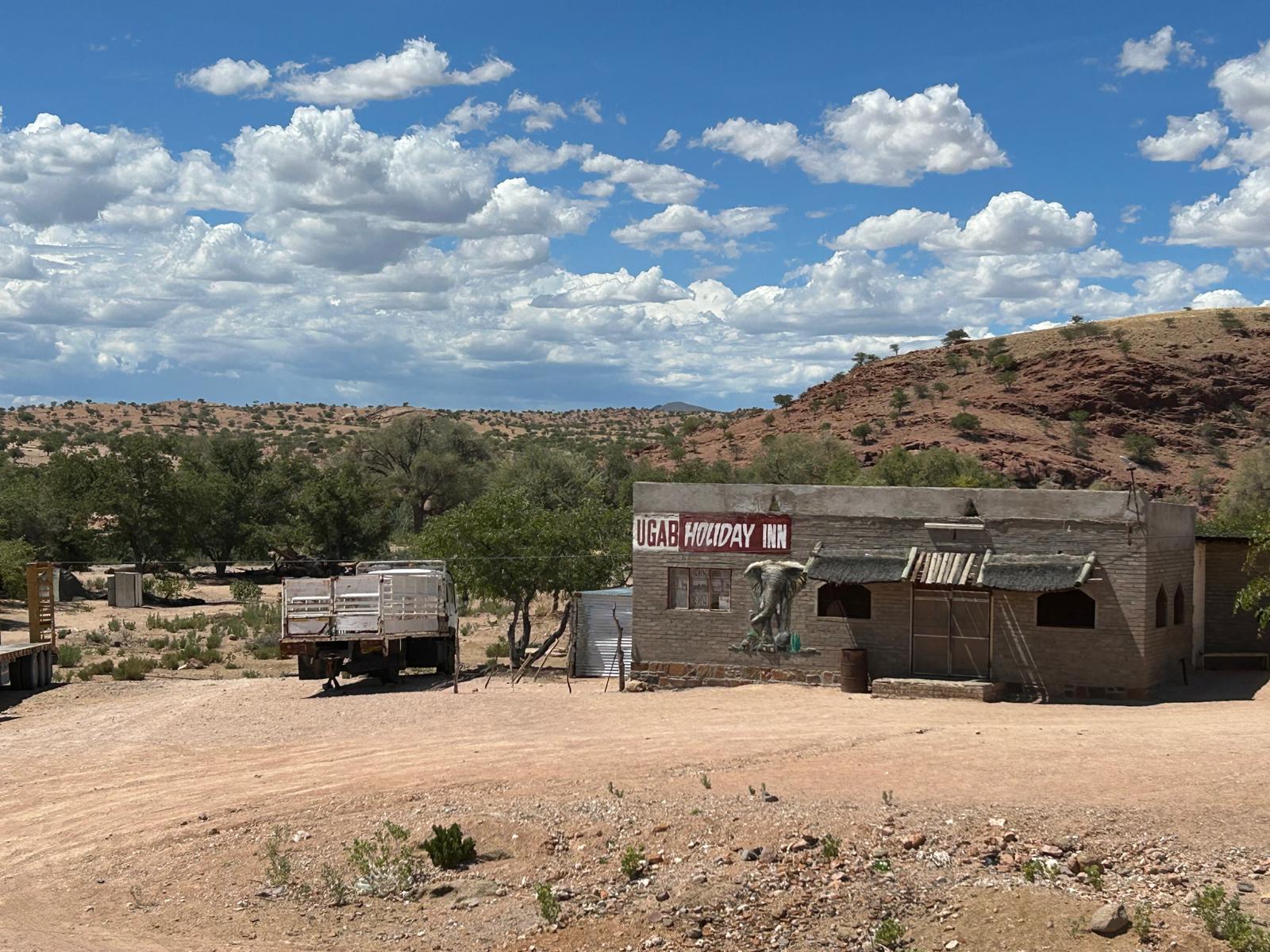
The Skeleton Coast doesn't inspire joy, and we decided to head for Damaraland. We passed through Uís, where we learned the story of the "White Lady", a rock painting over 2000 years old. And we continued on our way to Khorixas, our base for this late afternoon and night.
In Khorixas, we met Shaka, a Manchester City fan, a fan of Bernardo Silva, Rúben Dias, João Neves and, of course, he won a shirt from the glorious club. There's another Benfica fan in Khorixas (perhaps the only one :))
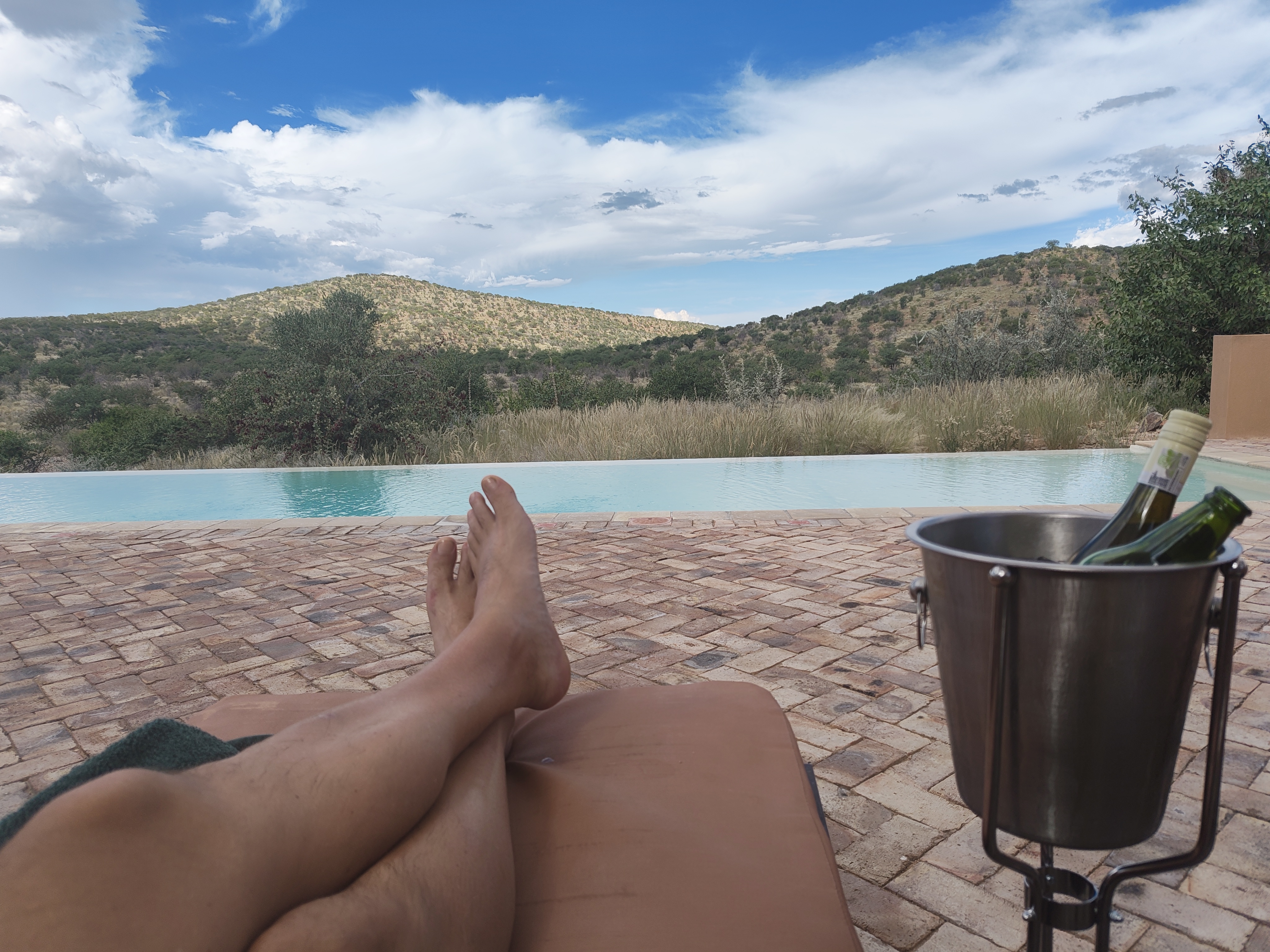
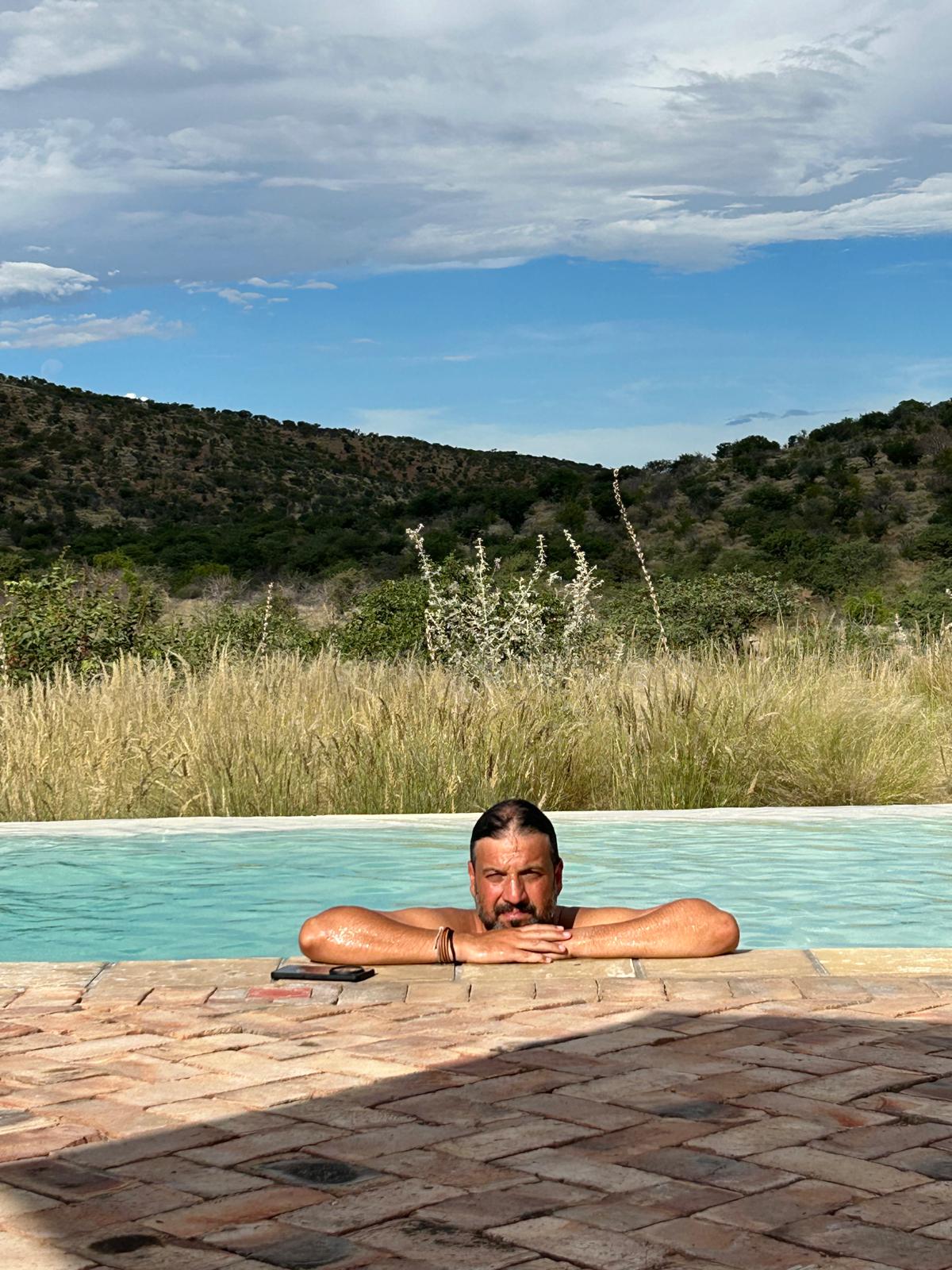
At the lodge, we were surprised by the remote location and, at the same time, by the friendly way we were received and by the "luxuries" like the communal pool, facing the mountain, which made it feel like we were in Tojeira looking at Campelos :)
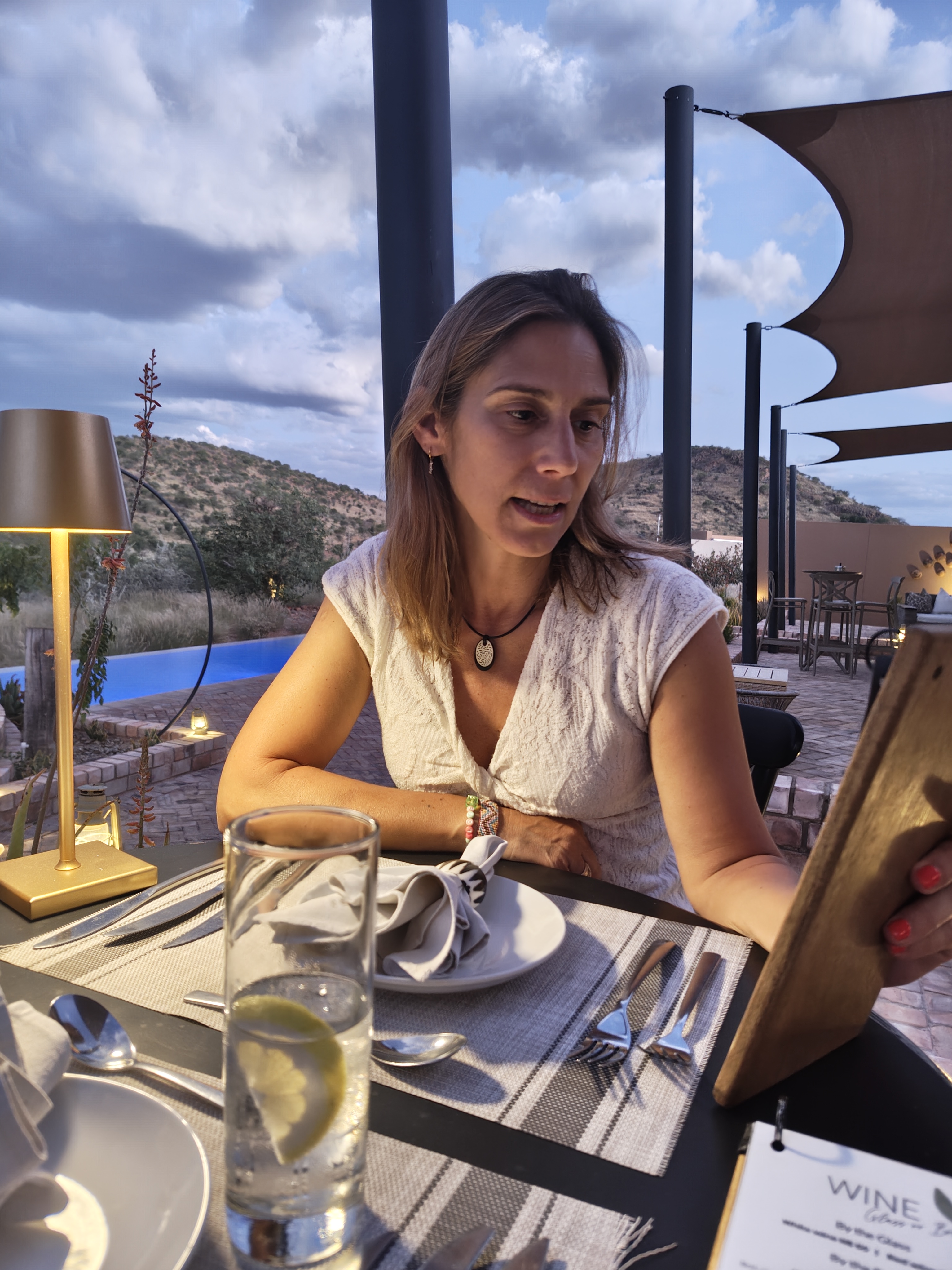
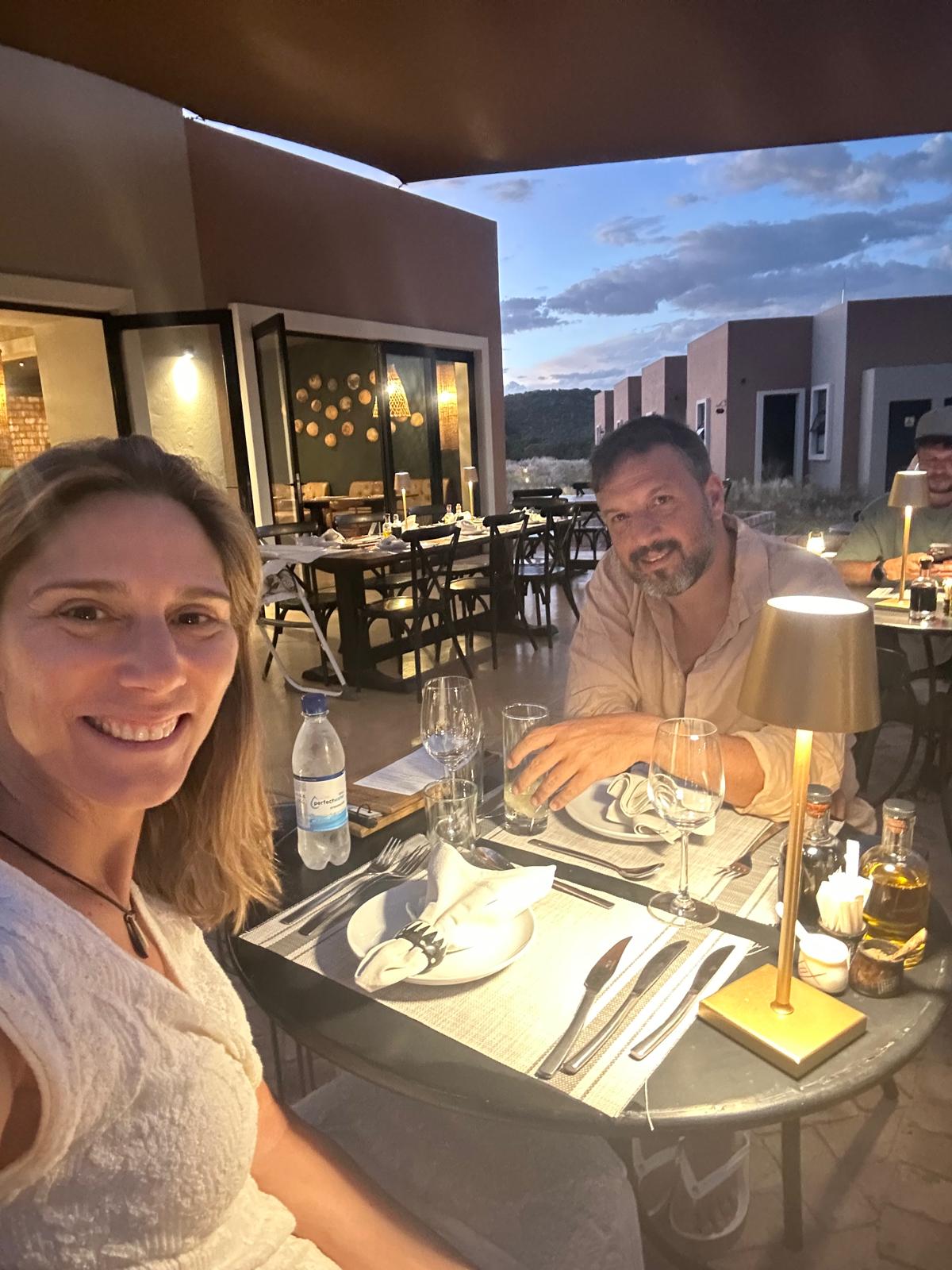
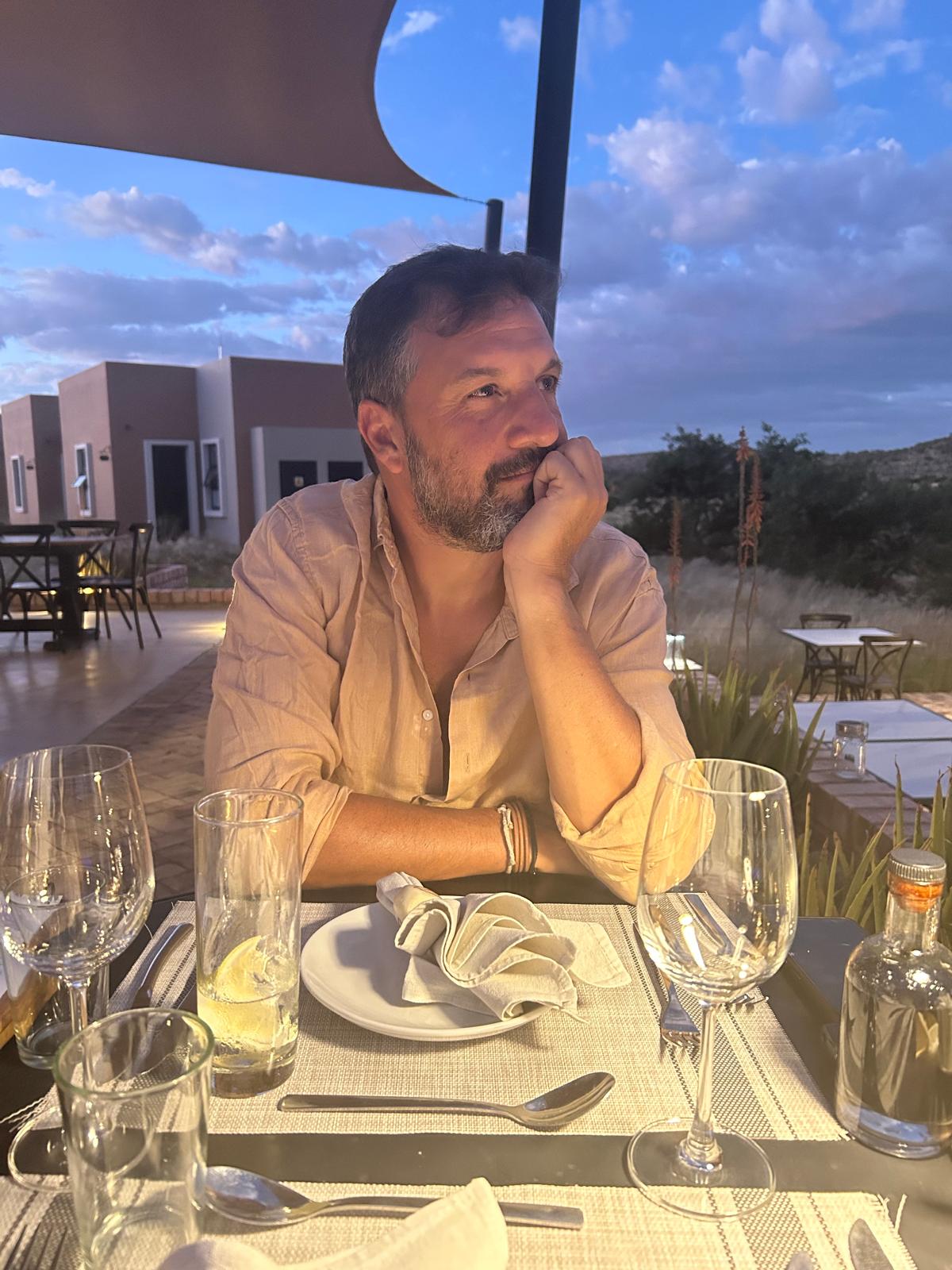
Dinner, next to the fire pit and the pool, was number 1 for me so far, beating TUG in Swakopmund. But it might have been the hunger, as we hadn't stopped for lunch since the lads left.
Meanwhile, the car's oil levels are still acceptable. A sign that the leaks are slow, much like our end of the day.
Tínhamos combinado as 7h30 para fazer o alinhamento da direcção. Pontualíssimo, deixei o carro e voltei para o hotel para o pequeno-almoço. "Às 8h30 está pronto", prometeram.
Às 8h30 lá estou. "Encontrámos problemas, chefe". O carro vertia três tipos de óleo: um vermelho (direcção), um verde (transmissão) e outro castanho (motor). Ainda disse que se o último fosse amarelo dava a bandeira de Portugal, mas não perceberam.
A direcção estava boa, mas devia ir ao mecânico ver destas fugas. Dito e feito, atendido pelo Saki, carro no elevador. Confirma-se o arco-íris de óleos. "É grave?", pergunto eu. "Não muito", diz o Saki. Compro os óleos das respectivas cores e atesto. Devo ir vigiando e levo reforços para abastecer.
Saímos, já atrasados, para Cape Cross. Paramos em Henties Bay para um café. Em Cape Cross espera-nos uma colónia de focas. Dizem que são 300 mil. Não contei. Mas pelo cheiro, algumas já devem estar mortas há algum tempo.
Ao lado, uma homenagem ao Diogo Cão, que dizem ter sido o primeiro europeu a chegar aqui e ali mandou construir uma cruz, daí o nome do sítio.
A Costa dos Esqueletos é assim conhecida por várias razões, sendo a principal o facto de ter inúmeras carcaças de embarcações que ali encalharam ao longo de 500 anos. Há uma que está neste momento a 400 metros da costa, entalada no meio do deserto, mas não fomos ver. Ficava muito mais a norte.
É um cenário um pouco deprimente, com uma neblina constante que testemunha uma luta sem tréguas entre o mar e o deserto. Eu diria que o deserto está a ganhar. Se o tal barco já está a 400 metros de distância do mar, devo ter razão. É, sem dúvida, uma das principais atrações da Namíbia, que se estende dali até à fronteira com Angola. Quando planeei a viagem, fiquei com alguma pena de não ir mais a norte na Costa dos Esqueletos, mas tinha de priorizar.
Imaginei os náufragos que, encalhados, se viam a salvo em terra, mas entalados entre um mar revolto do Atlântico Sul e um deserto a perder de vista, numa angústia desesperante e sem esperança.
A Costa dos Esqueletos não inspira alegria, e decidimos sair para Damaraland. Passamos por Uís, onde conhecemos a história da "Dama Branca", uma pintura rupestre com mais de 2000 anos. E continuamos a caminho de Khorixas, a nossa base para este final de tarde e noite.
Em Khorixas, conhecemos o Shaka, um adepto do Manchester City, fã do Bernardo Silva, Rúben Dias, João Neves e, claro, ganhou uma camisola do glorioso. Há mais um adepto do Benfica em Khorixas (talvez o único :))
No lodge, fomos surpreendidos pela localização remota e, ao mesmo tempo, pela forma tão amigável como fomos recebidos e pelos "luxos" como a piscina comum, virada para a montanha, que parecia que estávamos na Tojeira a olhar para Campelos :)
O jantar, ao lado do fire pit e da piscina, foi para mim o número 1 até agora, batendo o TUG de Swakopmund. Mas pode ter sido da fome, que desde que os rapazes foram embora não paramos para almoçar.
Entretanto, os óleos do carro ainda estão a um nível aceitável. Sinal de que as fugas são lentas, à semelhança do nosso final do dia.